In today’s technology landscape, open-source software has become an essential part of software development, innovation, and collaboration. Many organizations build applications using a combination of proprietary and open-source technologies to maximize flexibility and efficiency. When discussing How Much Mogothrow77 Software Is Open Source, it is important to understand that software ecosystems often include both publicly available components and privately maintained features.
For this general overview, Mogothrow77 software is discussed as a software platform that may incorporate open-source principles while also maintaining certain proprietary elements. Understanding how open source works within modern software projects helps users, developers, and businesses make informed decisions about adoption, customization, and contribution opportunities.
Understanding the Software Ecosystem
A software ecosystem consists of all technologies, tools, frameworks, libraries, and communities that contribute to the development and operation of a software product. Modern applications rarely exist in isolation. Instead, they rely on numerous interconnected components that work together to deliver functionality.
Within a software ecosystem, some elements may be fully open source, while others remain proprietary. Open-source components provide transparency and community collaboration, whereas proprietary features often support specialized business objectives or premium services. Understanding this balance helps explain how software projects evolve and maintain sustainability.
For software like Mogothrow77, the ecosystem may include development frameworks, third-party integrations, cloud services, APIs, security tools, and community-driven enhancements.
Why Open Source Matters
Open source has transformed the software industry by making technology more accessible and collaborative. Organizations and independent developers can review source code, contribute improvements, identify bugs, and adapt solutions to meet specific needs.
The open-source model encourages innovation by allowing ideas to spread rapidly across communities. Developers can build upon existing solutions instead of starting from scratch, reducing development time and accelerating progress.
Businesses also benefit from open source because it often lowers costs, increases flexibility, and reduces vendor dependency. These advantages explain why many modern software projects incorporate open-source technologies as part of their development strategy.
What Does Open Source Mean?
Before examining the open-source aspects of Mogothrow77 software, it is important to define what open source actually means.
Open source refers to software whose source code is publicly available for viewing, modification, and distribution under specific licensing terms. Unlike proprietary software, open-source projects encourage transparency and community participation.
The level of openness varies depending on licensing models and project governance structures. Some projects are fully open source, while others combine open-source foundations with proprietary extensions.
Definition of Open Source Software
Open-source software is software that allows users to inspect, modify, enhance, and distribute its source code. The source code serves as the blueprint that determines how the software functions.
This approach promotes collaboration among developers worldwide. Instead of restricting access, open-source projects invite contributions that improve features, performance, security, and reliability.
Many widely used technologies—including operating systems, databases, programming languages, and web frameworks—are based on open-source principles.
Key Characteristics of Open Source Projects
Open-source projects share several common characteristics. Transparency is one of the most important features because users can inspect the code to understand how the software operates.
Community involvement is another defining characteristic. Developers contribute bug fixes, documentation improvements, feature enhancements, and security updates.
Open-source projects also emphasize flexibility. Users can customize software according to their specific requirements rather than relying solely on vendor-provided functionality.
Finally, open-source software encourages innovation by fostering collaboration among diverse contributors across different industries and regions.
Understanding the Open-Source Components of Mogothrow77
Like many modern software platforms, Mogothrow77 software may utilize a combination of open-source and proprietary technologies. Understanding which components are open source helps users evaluate transparency, customization potential, and community involvement.
The open-source portions typically provide foundational functionality, while proprietary components may deliver specialized features or commercial services.
This hybrid approach allows organizations to balance innovation with business sustainability.
Core Features Available as Open Source
In many software projects, core features are released as open source to encourage adoption and community participation. These features may include fundamental application functionality, development tools, APIs, and integration capabilities.
Making core features available promotes transparency and allows developers to understand how the software operates internally.
Open-source core components also encourage external contributions that improve performance, reliability, and usability.
Proprietary vs. Open-Source Elements
A common software development strategy involves combining proprietary and open-source elements. Open-source components provide flexibility and collaboration, while proprietary features may support revenue generation and specialized functionality.
For example, a software platform may release its core framework as open source while offering advanced analytics, enterprise support, or premium integrations as proprietary services.
This balanced model enables innovation while maintaining commercial viability.
Licensing Structure and Usage Rights
Licensing determines how users can interact with open-source software. Different licenses grant different rights regarding modification, distribution, and commercial use.
Understanding licensing structures helps users comply with legal requirements and maximize the benefits of open-source technologies.
Organizations evaluating software platforms should carefully review licensing terms before deployment.
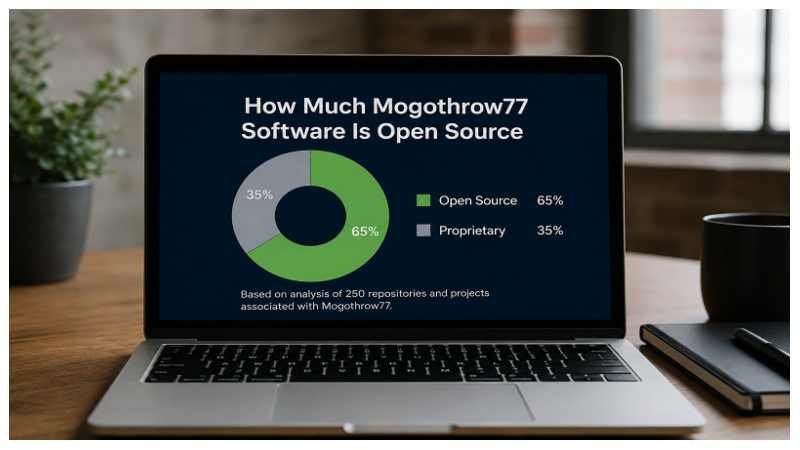
How Much of Mogothrow77 Software Is Open Source?
The degree to which software is open source depends on development philosophy, business strategy, and community goals. Some projects are entirely open source, while others adopt hybrid approaches.
When evaluating how much of Mogothrow77 software is open source, users should consider source code availability, community involvement, and licensing transparency.
These factors provide valuable insights into the software’s openness and flexibility.
Publicly Accessible Source Code
Publicly accessible source code is one of the clearest indicators of open-source commitment. When source code is available for review, users gain greater visibility into software functionality and security.
Access to source code also enables developers to customize solutions and contribute improvements.
Transparency through public repositories strengthens trust and encourages collaboration.
Community-Contributed Components
Community contributions play a significant role in many open-source projects. Contributors may develop new features, fix bugs, improve documentation, and suggest enhancements.
These contributions expand software capabilities while accelerating innovation. Community-driven development also helps projects adapt to changing user requirements and technological trends.
Strong community participation often indicates a healthy and sustainable software ecosystem.
Commercial Features and Restrictions
Even within open-source projects, certain features may remain commercial. Premium functionality, enterprise support, managed services, and advanced integrations are commonly offered as paid options.
Commercial components help fund development efforts and ensure ongoing project sustainability.
Understanding these distinctions allows users to evaluate available options and choose solutions that align with their requirements.
Benefits of the Open-Source Approach
The open-source model offers numerous advantages for both developers and organizations. These benefits contribute to the widespread adoption of open-source technologies across industries.
Transparency, innovation, and collaboration are among the most significant advantages.
Open-source ecosystems continue to drive technological progress worldwide.
Increased Transparency
Transparency enables users to inspect software behavior and verify security practices. Open access to source code reduces uncertainty and builds confidence in software reliability.
Organizations can evaluate code quality, identify potential vulnerabilities, and understand system operations more thoroughly.
This visibility strengthens trust and accountability.
Faster Innovation and Development
Open-source communities accelerate innovation by encouraging collaboration among developers worldwide.
Ideas, improvements, and solutions can be shared rapidly, reducing development cycles and increasing productivity.
The collective expertise of contributors often leads to higher-quality software and more rapid feature development.
Community Collaboration and Support
Community collaboration is one of the greatest strengths of open source. Developers, users, and organizations work together to improve software functionality and resolve issues.
Active communities provide valuable resources, including documentation, tutorials, forums, and technical support.
This collaborative environment fosters continuous learning and innovation.
Open-Source Technologies Used in Mogothrow77
Most modern software projects rely on open-source technologies to accelerate development and reduce costs.
These technologies provide proven solutions for common development challenges and support rapid innovation.
Open-source tools often form the foundation of successful software ecosystems.
Programming Languages and Frameworks
Programming languages and frameworks are essential building blocks of software development. Many popular languages and frameworks are open source, providing flexibility and extensive community support.
These technologies enable developers to build scalable, maintainable, and high-performing applications.
Open-source frameworks also simplify development by providing reusable components and best practices.
Third-Party Open-Source Libraries
Third-party libraries help developers implement functionality without building every feature from scratch.
Libraries support tasks such as data processing, user authentication, networking, analytics, and interface design.
Using trusted open-source libraries improves development efficiency while reducing project complexity.
Development and Deployment Tools
Development and deployment tools streamline software creation, testing, and release processes.
Many modern tools are open source and support collaboration, automation, and continuous integration.
These technologies help teams deliver reliable software more efficiently.
Contribution Opportunities
Open-source projects thrive when community members participate actively. Contributions help improve software quality and expand functionality.
Developers, testers, writers, and users all play valuable roles in project success.
Contribution opportunities vary depending on project structure and community guidelines.
How Developers Can Contribute
Developers can contribute by writing code, fixing bugs, improving performance, and creating new features.
Contributions often begin with reviewing project documentation and identifying areas for improvement.
Participating in development efforts strengthens both the project and the contributor’s technical skills.
Reporting Issues and Suggesting Improvements
Not all contributions involve coding. Users can report bugs, identify usability issues, and suggest feature enhancements.
Constructive feedback helps development teams prioritize improvements and address user needs.
Issue reporting plays a vital role in software quality assurance.
Participating in Community Discussions
Community discussions provide opportunities for collaboration, knowledge sharing, and problem-solving.
Forums, discussion boards, and communication platforms allow contributors to exchange ideas and coordinate development efforts.
Strong communication strengthens project communities and encourages ongoing participation.
Security and Open Source
Security is a critical consideration for any software project. Open-source development offers unique advantages for identifying and resolving vulnerabilities.
Community involvement often enhances security through increased visibility and review.
Security-focused practices contribute to software reliability and user trust.
Advantages of Open Security Reviews
Open security reviews allow experts worldwide to examine source code for vulnerabilities and weaknesses.
This collaborative approach increases the likelihood of identifying issues before they become serious threats.
Transparency supports stronger security practices and faster problem resolution.
Identifying and Fixing Vulnerabilities
Open-source communities often respond quickly to security concerns. Contributors can identify vulnerabilities, develop fixes, and distribute updates efficiently.
Rapid response capabilities help reduce risks and improve software resilience.
Continuous monitoring supports long-term security improvements.
Maintaining Software Integrity
Maintaining software integrity requires consistent quality control, testing, and governance.
Development teams implement review processes and security measures to ensure reliability and stability.
Strong governance helps preserve trust and maintain project standards.
Challenges of Open-Source Software
Despite its advantages, open-source software also presents challenges that require careful management.
Projects must balance innovation, quality, security, and sustainability.
Addressing these challenges contributes to long-term success.
Managing Community Contributions
Large communities can generate significant volumes of contributions. Managing these contributions requires structured workflows and clear guidelines.
Project maintainers review submissions to ensure consistency and quality.
Effective contribution management supports healthy project growth.
Maintaining Code Quality
As projects expand, maintaining high code quality becomes increasingly important.
Development teams use testing, code reviews, and documentation standards to ensure reliability.
Consistent quality practices help prevent technical debt and improve maintainability.
Balancing Open and Commercial Features
Hybrid software models must balance community interests with business objectives.
Organizations need strategies that encourage collaboration while supporting sustainable revenue streams.
Finding the right balance is essential for long-term viability.
Licensing and Compliance Considerations
Licensing governs how open-source software can be used, modified, and distributed.
Organizations must understand licensing obligations to avoid compliance issues.
Proper license management supports responsible software usage.
Understanding Open-Source Licenses
Open-source licenses define user rights and responsibilities.
Different licenses offer varying levels of flexibility regarding modification, redistribution, and commercial use.
Understanding these distinctions helps organizations make informed decisions.
User Responsibilities and Compliance
Users must comply with licensing requirements when deploying or distributing open-source software.
Compliance may involve attribution requirements, source code disclosure obligations, or usage restrictions.
Responsible compliance supports healthy software ecosystems.
Commercial Usage Guidelines
Many open-source licenses permit commercial use, but specific conditions may apply.
Organizations should review licensing terms carefully before integrating software into commercial products or services.
Understanding commercial guidelines reduces legal and operational risks.
Comparing Mogothrow77 with Other Open-Source Software
Comparisons help users understand how different software projects approach openness, collaboration, and innovation.
Each project reflects unique goals, governance models, and community structures.
Evaluating similarities and differences supports informed decision-making.
Similarities in Development Models
Many open-source projects share common development practices, including public repositories, community contributions, and transparent governance.
These similarities promote collaboration and encourage widespread participation.
Shared methodologies help establish consistent standards across projects.
Unique Features and Advantages
Every software platform offers unique strengths based on its architecture, objectives, and user community.
Distinctive features help projects address specific challenges and differentiate themselves within competitive markets.
Innovation remains a key driver of success.
Community Support Comparison
Community support varies significantly between projects.
Strong communities provide valuable resources, technical assistance, and development contributions.
Active participation often correlates with project sustainability and growth.
Future of Open Source in Mogothrow77
The future of open source continues to evolve alongside technological advancements and changing user expectations.
Software projects increasingly embrace openness as a strategy for innovation and collaboration.
Future developments may expand community involvement and functionality.
Planned Open-Source Expansions
Many software platforms explore opportunities to release additional components as open source.
Expanding openness can strengthen community engagement and accelerate development.
Future initiatives may focus on greater transparency and collaboration.
Emerging Technologies and Integrations
Emerging technologies such as artificial intelligence, automation, blockchain, and cloud-native development are influencing open-source ecosystems.
Integrating these innovations can expand capabilities and improve user experiences.
Technology evolution continues to create new opportunities.
Long-Term Development Vision
A strong long-term vision guides software growth and sustainability.
Strategic planning helps projects adapt to changing technologies, user needs, and industry trends.
Long-term success depends on continuous innovation and community support.
Benefits for Businesses and Developers
Open-source software offers valuable advantages for organizations and technical professionals alike.
Flexibility, collaboration, and cost savings contribute to widespread adoption.
These benefits continue driving investment in open-source technologies.
Cost Efficiency
Open-source solutions often reduce licensing costs and increase budget flexibility.
Organizations can allocate resources toward customization, support, and innovation rather than expensive software licenses.
Cost efficiency supports business growth and competitiveness.
Customization Flexibility
Access to source code allows organizations to tailor software to specific requirements.
Customization improves operational alignment and supports unique business processes.
Flexible solutions adapt more effectively to evolving needs.
Improved Collaboration
Open-source development encourages collaboration across organizations, industries, and geographic regions.
Shared knowledge and collective problem-solving accelerate innovation and improve software quality.
Collaboration remains one of the most powerful advantages of the open-source model.
Conclusion
Understanding How Much Mogothrow77 Software Is Open Source requires examining source code availability, licensing structures, community involvement, and development practices. While software projects vary in their level of openness, the principles of transparency, collaboration, and innovation remain central to the open-source movement. Whether fully open source or built on a hybrid model, open-source technologies continue shaping the future of software development.
Key Takeaways
- Open-source software provides access to source code for review and modification.
- Transparency and community collaboration drive innovation.
- Many software platforms combine open-source and proprietary components.
- Licensing determines usage rights and responsibilities.
- Open-source technologies accelerate development and reduce costs.
- Community participation strengthens software quality and sustainability.
- Businesses benefit from flexibility, customization, and collaboration.
Final Thoughts on How Much Mogothrow77 Software Is Open Source
The open-source approach has transformed the software industry by encouraging transparency, collaboration, and continuous improvement. As software ecosystems continue evolving, projects like Mogothrow77 can benefit from integrating open-source principles while balancing commercial objectives. For developers, businesses, and users alike, understanding the role of open source provides valuable insight into how modern software is built, maintained, and improved over time.