Installing software correctly is one of the most important steps in ensuring smooth operation, reliable performance, and long-term stability. Understanding How Is Mogothrow77 Software Installation helps users avoid common issues and prepare their systems for successful deployment. Whether the software is being installed on a personal computer, a business workstation, or a network environment, following the proper installation process can significantly improve the overall experience.
A successful installation involves more than simply running an installer. It requires verifying system requirements, preparing the environment, configuring settings, and ensuring that all necessary dependencies are available. By following a structured approach, users can maximize the software’s functionality while minimizing potential complications.
What Is Mogothrow77 Software?
Mogothrow77 software is a digital application designed to provide users with specific functionality, automation capabilities, or business solutions. Like many modern software products, it is developed to improve efficiency, streamline workflows, and support productivity across different environments.
The software may include various features such as data processing, user management, reporting tools, integration capabilities, and customizable settings. Its design focuses on providing reliable performance while maintaining ease of use for both beginners and experienced users.
Understanding the software’s purpose helps users appreciate the importance of a proper installation process and configuration setup.
Why Proper Installation Matters
A well-executed installation process ensures that the software functions as intended from the beginning. Improper installation can lead to performance issues, security vulnerabilities, compatibility problems, and system instability.
Proper installation guarantees that all required files, configurations, and dependencies are correctly placed and activated. It also reduces the likelihood of future technical problems that could disrupt operations or affect productivity.
By investing time in proper installation procedures, users create a stable foundation for successful software usage.
System Requirements Before Installation
Before beginning installation, it is essential to evaluate system requirements. Every software application has minimum and recommended specifications that determine whether it can operate efficiently.
Checking requirements beforehand helps avoid installation failures and performance limitations. It also ensures that users can take full advantage of the software’s capabilities without encountering unnecessary issues.
System requirements typically include hardware specifications, operating system compatibility, and software dependencies.
Hardware Requirements
Hardware resources play a significant role in software performance. Users should verify that their systems meet the minimum requirements for processor speed, memory capacity, storage space, and graphics capabilities.
Insufficient hardware resources may result in slow performance, application crashes, or installation failures. Organizations deploying software across multiple devices should ensure consistent hardware standards to maintain optimal performance.
Meeting recommended hardware requirements often provides a smoother and more responsive user experience.
Operating System Compatibility
Software compatibility with the operating system is another critical factor. Users should confirm that Mogothrow77 software supports their version of Windows, macOS, Linux, or any other operating system being used.
Compatibility issues can prevent installation or cause unexpected behavior after deployment. Software vendors typically provide documentation outlining supported operating systems and version requirements.
Keeping operating systems updated can also improve compatibility and security.
Required Software Dependencies
Many applications rely on additional software components to function correctly. These dependencies may include runtime environments, libraries, frameworks, database engines, or supporting utilities.
Installing required dependencies before deployment helps prevent errors and ensures smooth operation. Developers often include dependency information within installation guides and documentation.
Verifying dependencies beforehand can save considerable troubleshooting time later.
Preparing for the Installation Process
Preparation is a vital step that improves installation success rates. Users should organize necessary files, review documentation, and ensure that the system is ready for deployment.
Proper preparation minimizes interruptions and reduces the likelihood of errors during installation.
Taking a few extra precautions before starting can make the entire process more efficient and reliable.
Downloading the Installation Package
The first step is obtaining the correct installation package. Users should download the software from an authorized source to ensure authenticity and security.
Official downloads typically contain the latest version of the software along with important updates and fixes. Using unauthorized sources increases the risk of malware infections, corrupted files, and unsupported software versions.
Always verify that the downloaded package matches the intended operating system and platform.
Verifying File Integrity
File integrity verification helps confirm that installation files have not been corrupted or modified during download.
Many software providers offer checksums or digital signatures that users can compare against downloaded files. Verifying integrity ensures that installation files remain authentic and complete.
This extra step can prevent installation problems and improve security.
Backing Up Important Data
Creating backups before installation is a recommended practice. Although software installations rarely affect personal data, unexpected issues can occur during system modifications.
Creating backups acts as a reliable safeguard, ensuring that valuable files, configurations, and system settings can be restored quickly in the event of unexpected issues, installation failures, or data loss. Organizations often implement comprehensive backup procedures before deploying new software across production environments.
Protecting valuable data should always be a priority.
Step-by-Step Mogothrow77 Software Installation
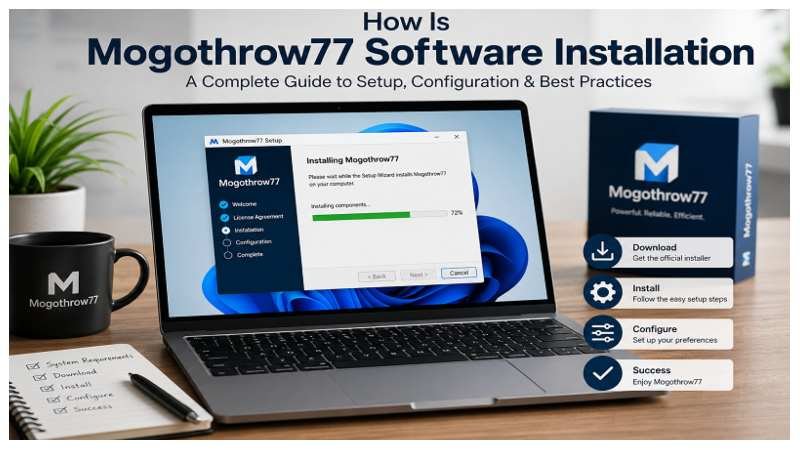
Adhering to a well-organized installation process promotes uniform setup results while minimizing the chances of configuration mistakes, compatibility issues, and deployment failures.
Each stage of the installation process contributes to successful deployment and proper software functionality.
Careful attention to instructions helps users complete installation efficiently.
Launching the Installer
Once the installation package has been downloaded and verified, users can launch the installer. This process typically begins by running the executable file or opening the installation package.
The installer guides users through the setup process and performs necessary system checks before proceeding.
Administrative privileges may be required depending on the software and operating system.
Accepting License Agreements
Most software installations require users to review and accept licensing agreements. These agreements outline usage rights, restrictions, and legal responsibilities.
Reading the agreement helps users understand the terms associated with software usage. Acceptance is usually required before installation can continue.
Organizations should review licensing requirements carefully to ensure compliance.
Selecting Installation Preferences
Installation preferences allow users to customize aspects of the deployment process. Common options include installation location, feature selection, language settings, and shortcut creation.
Choosing appropriate preferences helps tailor the software environment to individual or organizational needs.
Advanced users may customize settings for specific deployment scenarios.
Completing the Installation Wizard
The installation wizard manages file copying, configuration tasks, and dependency setup. Users simply follow on-screen instructions until the process is complete.
Upon completion, the wizard may provide confirmation messages, launch options, or recommendations for additional configuration.
A successful installation concludes with the software being ready for initial setup.
Initial Software Configuration
After installation, users typically perform initial configuration tasks to personalize the software environment.
Configuration settings help optimize functionality and align the software with operational requirements.
Proper setup improves usability and overall effectiveness.
Setting Up User Accounts
User account creation allows individuals to access software features based on assigned permissions and roles.
Account management helps organizations control access, track activity, and maintain security standards.
Configuring accounts correctly from the start simplifies administration and improves accountability.
Configuring System Preferences
System preferences allow users to adjust software behavior according to their needs. Common settings include display options, notifications, performance parameters, and workflow preferences.
Customization improves efficiency and helps users work more comfortably within the application.
Organizations may standardize certain settings across teams to maintain consistency.
Connecting Required Services
Many software applications integrate with external services such as databases, cloud platforms, authentication providers, or communication tools.
Connecting these services enables full functionality and ensures seamless operation across interconnected systems.
Successful integration expands software capabilities and enhances productivity.
Common Installation Methods
Software can be installed using different deployment methods depending on user requirements and infrastructure environments.
Understanding these methods helps organizations select the most appropriate installation strategy.
Each approach offers unique advantages and considerations.
Standard Installation
Standard installation follows the default settings recommended by the software provider. This method is ideal for most users because it simplifies deployment and minimizes configuration complexity.
Default settings are typically optimized for general usage scenarios.
Standard installation is often the quickest and easiest option.
Custom Installation
Custom installation provides greater flexibility by allowing users to select specific components and configurations.
Organizations often choose this method when deploying software in specialized environments.
Customization enables better resource management and feature control.
Network-Based Installation
Network-based installation allows software deployment across multiple systems from a centralized location.
This method improves efficiency for large organizations and simplifies software management.
Centralized deployment reduces administrative effort and ensures consistency across devices.
Troubleshooting Installation Issues
Despite careful preparation, installation issues can occasionally occur.
Troubleshooting techniques help identify and resolve problems efficiently.
Understanding common issues improves overall installation success rates.
Resolving Compatibility Problems
Compatibility issues may arise when software requirements do not match system specifications.
Users should verify operating system versions, hardware capabilities, and dependency availability.
Updating system components often resolves compatibility concerns.
Fixing Installation Errors
Installation errors can result from corrupted files, insufficient permissions, or interrupted processes.
Reviewing error messages provides valuable information for identifying root causes.
Following official troubleshooting guides can help resolve most installation-related issues.
Handling Missing Dependencies
Missing dependencies are a common cause of installation failures.
Installing required libraries, frameworks, or runtime environments usually resolves these problems.
Keeping dependencies updated improves stability and compatibility.
Security Considerations During Installation
Security should remain a priority throughout the installation process.
Following best practices helps protect systems from unauthorized access and malicious threats.
Secure installation procedures contribute to long-term software reliability.
Downloading from Trusted Sources
Only download software from verified and reputable sources.
Trusted sources reduce the risk of malware, counterfeit software, and compromised files.
Authentic downloads provide greater security and reliability.
Managing User Permissions
Appropriate permission management prevents unauthorized changes during installation.
Administrative access should be granted only when necessary and controlled carefully.
Permission management improves security and system integrity.
Protecting Sensitive Data
Sensitive information should be protected throughout installation and configuration processes.
Encryption, access controls, and secure storage practices help safeguard valuable data.
Data protection measures support compliance and user trust.
Verifying Successful Installation
Verification confirms that the software has been installed correctly and is functioning as expected.
Post-installation validation helps identify issues before they affect users.
Comprehensive verification improves deployment reliability.
Running Initial Tests
Initial tests evaluate core functionality and ensure that essential features operate correctly.
Testing immediately after installation helps detect configuration problems early.
Successful tests provide confidence in system readiness.
Checking Software Functionality
Users should explore key features and workflows to confirm proper operation.
Functionality checks verify that all components are installed correctly and working as intended.
These evaluations help identify potential issues before widespread use.
Confirming System Integration
Integrated services and connected systems should be tested to ensure compatibility.
Verification confirms that data exchanges, authentication processes, and external connections function properly.
Successful integration supports seamless operations.
Updating Mogothrow77 Software After Installation
Keeping software updated is essential for performance, security, and feature improvements.
Regular updates ensure that users benefit from the latest enhancements and fixes.
A proactive update strategy supports long-term reliability.
Installing the Latest Updates
Software updates often include performance improvements, new features, and security enhancements.
Installing updates promptly helps maintain software effectiveness and stability.
Organizations should establish update schedules to ensure consistency.
Managing Software Patches
Patches address specific issues such as bugs, vulnerabilities, and compatibility concerns.
Applying patches promptly reduces risks and improves software quality.
Patch management should be part of regular maintenance procedures.
Enabling Automatic Updates
Automatic updates simplify maintenance by ensuring that software remains current.
Automated systems reduce administrative workload and minimize the risk of outdated software.
Organizations should evaluate updated policies based on operational requirements.
Best Practices for Software Installation
Following best practices improves installation outcomes and reduces potential complications.
These recommendations support long-term software success.
Adopting proven strategies benefits both individuals and organizations.
Maintaining System Stability
Stable systems provide better performance and reliability.
Regular maintenance, updates, and monitoring help preserve operational stability.
Proactive management reduces downtime and technical issues.
Creating Recovery Points
Recovery points provide a mechanism for restoring systems if installation problems occur.
Creating recovery points before major changes improves resilience and simplifies troubleshooting.
This precaution offers valuable protection against unexpected issues.
Documenting Installation Settings
Documentation helps users and administrators track configuration details and deployment decisions.
Accurate records simplify maintenance, troubleshooting, and future upgrades.
Documentation supports efficient software management.
Benefits of Proper Mogothrow77 Software Installation
A successful installation delivers numerous benefits that enhance software performance and user satisfaction.
Following recommended procedures maximizes value and minimizes risks.
Proper installation serves as the foundation for long-term success.
Improved Performance
Correct installation ensures that software operates efficiently and utilizes system resources effectively.
Optimized performance improves responsiveness, productivity, and reliability.
Users benefit from smoother operations and reduced disruptions.
Enhanced Security
Secure installation practices protect systems from threats and vulnerabilities.
Proper configuration strengthens defenses and supports compliance requirements.
Security-focused deployment improves overall trust and reliability.
Better User Experience
A properly installed application provides a more enjoyable and productive experience.
Users encounter fewer issues and can access features without unnecessary complications.
Positive experiences contribute to higher satisfaction and adoption rates.
Common Mistakes to Avoid
Avoiding common installation mistakes helps ensure successful deployment.
Awareness of these pitfalls reduces risks and improves outcomes.
Careful preparation and attention to detail are essential.
Skipping System Requirement Checks
Ignoring system requirements can lead to installation failures and poor performance.
Users should always verify compatibility before beginning deployment.
Requirement checks save time and prevent frustration.
Ignoring Installation Warnings
Warning messages often provide valuable information about potential issues.
Ignoring warnings can result in configuration problems and software instability.
Users should review all warnings carefully before proceeding.
Using Outdated Installation Files
Old installation files may lack important updates and security fixes.
Using current versions ensures better compatibility, performance, and protection.
Always download the latest available release.
Conclusion
Understanding How Is Mogothrow77 Software Installation helps users approach deployment with confidence and preparation. From verifying requirements and configuring settings to testing functionality and applying updates, each step contributes to a successful installation experience. Careful planning and adherence to best practices reduce risks and maximize software effectiveness.
Key Takeaways
- Verify system requirements before installation.
- Download software only from trusted sources.
- Back up important data before making system changes.
- Configure settings carefully after installation.
- Test functionality and integrations thoroughly.
- Keep software updated with patches and improvements.
- Follow security best practices throughout deployment.
Final Thoughts on Mogothrow77 Software Installation
A successful software installation is the result of careful preparation, proper execution, and ongoing maintenance. By following structured procedures and paying attention to system requirements, security considerations, and post-installation verification, users can ensure that Mogothrow77 software operates efficiently and reliably. Proper installation not only improves performance but also lays the groundwork for a secure, stable, and productive software environment.