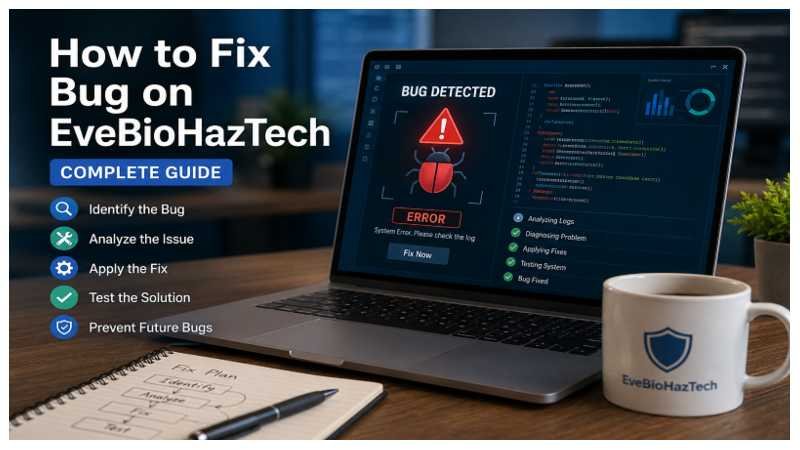
Software issues are a common part of any digital system, regardless of how advanced or well-developed it may be. Applications occasionally encounter errors that affect performance, functionality, or user experience. Understanding How to Fix Bug on EveBioHazTech: Complete Guide helps users and developers identify problems, apply effective solutions, and maintain reliable software performance.
Bug fixing is an essential aspect of software maintenance. Every software application goes through continuous improvement cycles where issues are detected, analyzed, and resolved. Whether the problem involves performance slowdowns, system crashes, compatibility conflicts, or security vulnerabilities, a structured troubleshooting approach helps restore stability and functionality.
This guide explains the most common causes of software bugs, troubleshooting techniques, debugging methods, and preventive strategies that can help maintain a stable EveBioHazTech environment.
What Is a Software Bug?
A software bug is an error, flaw, or unexpected behavior within an application that causes it to function incorrectly. Bugs may appear as crashes, incorrect outputs, missing features, performance issues, or security weaknesses.
Software bugs can range from minor visual glitches to serious issues that affect system operations. Some bugs only appear under specific conditions, making them difficult to detect and reproduce.
Identifying and resolving bugs is an ongoing process that helps ensure software reliability and user satisfaction.
Why Bug Resolution Is Important
Bug resolution plays a critical role in maintaining software quality. Unresolved issues can reduce productivity, frustrate users, compromise security, and negatively impact business operations.
Quick and effective bug fixes help maintain system stability while improving performance and reliability. Organizations that prioritize bug management often experience fewer disruptions and higher user satisfaction.
Consistent troubleshooting and maintenance also contribute to the long-term success of software platforms.
Understanding Bugs in EveBioHazTech
Like any software solution, EveBioHazTech may experience occasional bugs due to configuration changes, compatibility issues, coding errors, or environmental factors.
Understanding how bugs occur helps users and administrators diagnose problems more efficiently. A structured understanding of software issues reduces troubleshooting time and improves solution accuracy.
By recognizing common bug categories, teams can develop more effective resolution strategies.
Common Types of Software Bugs
Software bugs can appear in several forms. Functional bugs affect features and workflows, while performance bugs impact speed and responsiveness. User interface bugs create display or navigation problems, and security bugs introduce vulnerabilities.
Integration bugs may occur when software communicates with external services or databases. Compatibility bugs often arise when systems operate across different devices or operating systems.
Recognizing bug categories helps narrow the troubleshooting process.
Causes of Bugs in Software Systems
Bugs may originate from coding mistakes, configuration errors, hardware limitations, software conflicts, incomplete testing, or unexpected user interactions.
Environmental changes, such as operating system updates or third-party software installations, can also introduce new issues.
Understanding root causes is essential for applying effective fixes and preventing future occurrences.
Identifying the Bug
Successful troubleshooting begins with accurately identifying the issue. Before applying fixes, it is important to gather information about the problem and understand its behavior.
Accurately pinpointing the issue eliminates unnecessary assumptions and streamlines the diagnostic process, leading to faster and more effective troubleshooting.
A systematic approach helps prevent unnecessary changes.
Recognizing Error Symptoms
Error symptoms provide valuable clues about the nature of a bug. Common signs include application crashes, slow performance, freezing, missing functionality, unusual error messages, and failed operations.
Observing when and how these symptoms occur helps narrow potential causes.
Detailed symptom analysis supports more accurate troubleshooting.
Collecting Error Information
Gathering detailed information is a critical troubleshooting step. Information may include screenshots, error messages, log entries, timestamps, and user actions leading up to the problem.
Well-documented records provide developers and technical support teams with deeper insights into the problem, enabling faster diagnosis and more accurate solutions.
Comprehensive documentation improves resolution speed.
Reproducing the Issue
Reproducing a bug means consistently triggering the problem under controlled conditions.
A consistently repeatable issue provides a clear path for investigation, allowing teams to examine its behavior, pinpoint the underlying cause, and implement an effective resolution.
Reproducible issues provide valuable insights into root causes and contributing factors.
Preparing for the Troubleshooting Process
Proper preparation reduces risks during troubleshooting and ensures important data remains protected.
A structured preparation process supports efficient problem-solving.
Preparation also minimizes the impact of unexpected complications.
Backing Up Important Data
Before making significant changes, users should create backups of important files, configurations, and system settings.
Backups provide a recovery option if troubleshooting steps produce unintended results.
Data protection should always be a priority during software maintenance.
Reviewing System Requirements
Verifying system requirements helps ensure the software operates within supported environments.
Hardware limitations, unsupported operating systems, or missing resources can contribute to software issues.
Requirement verification eliminates potential compatibility concerns.
Checking Recent Changes and Updates
Many bugs appear after software updates, configuration changes, or hardware modifications.
Reviewing recent changes helps identify potential causes and narrow troubleshooting efforts.
Change tracking is an important diagnostic technique.
Common Causes of Bugs in EveBioHazTech
Understanding common bug sources can significantly accelerate troubleshooting.
Many software issues originate from predictable areas.
Recognizing these areas helps users focus their efforts effectively.
Software Configuration Errors
Incorrect configuration settings can cause unexpected software behavior.
Misconfigured options, invalid parameters, and incomplete setup processes often result in functionality issues.
Configuration reviews frequently reveal hidden causes of software bugs.
Compatibility Issues
Compatibility problems occur when software interacts with unsupported hardware, operating systems, drivers, or third-party applications.
These conflicts may cause crashes, performance degradation, or missing features.
Compatibility testing helps identify and resolve such issues.
Corrupted Files and Data
Corrupted application files, databases, or system resources can interfere with normal software operations.
Corruption may result from incomplete installations, storage failures, malware infections, or unexpected shutdowns.
File verification and restoration procedures often resolve these problems.
Network and Connectivity Problems
Applications that depend on online services may experience issues related to network disruptions, server outages, or communication failures.
Connectivity problems can affect synchronization, authentication, and data transfer processes.
Network diagnostics help identify communication-related bugs.
Step-by-Step Process to Fix Bugs
A structured troubleshooting process improves consistency and efficiency.
Following defined steps helps prevent overlooked details and unnecessary changes.
Systematic methods increase the likelihood of successful bug resolution.
Analyzing Error Messages
Error messages often provide valuable diagnostic information.
Carefully reviewing message details can reveal specific causes, affected components, and recommended actions.
Error analysis is one of the most effective troubleshooting techniques.
Isolating the Root Cause
Root cause analysis focuses on identifying the underlying source of a problem rather than addressing symptoms alone.
By isolating the primary cause, users can implement more reliable solutions.
This approach helps prevent recurring issues.
Applying Appropriate Fixes
Once the root cause is identified, appropriate corrective actions can be applied.
Fixes may include configuration adjustments, software updates, code modifications, file replacements, or system repairs.
Targeted solutions improve efficiency and effectiveness.
Testing the Solution
After applying a fix, thorough testing confirms that the issue has been resolved successfully.
Testing should verify both functionality and stability.
Validation ensures that no new problems have been introduced.
Software Diagnostic Tools
Diagnostic tools help users analyze system behavior and identify software issues more efficiently.
These tools provide valuable insights into performance, errors, and resource utilization.
Effective diagnostics support faster troubleshooting.
Built-In Troubleshooting Features
Many applications include built-in diagnostic functions designed to identify common issues.
These tools may perform system checks, verify configurations, and suggest corrective actions.
Built-in diagnostics simplify troubleshooting for users.
Error Logs and Monitoring Tools
Logs record software activities, warnings, and errors.
Analyzing logs provides detailed information about system events and failure conditions.
Monitoring tools help detect issues before they become critical.
Performance Analysis Utilities
Performance utilities measure system responsiveness, resource consumption, and operational efficiency.
These tools help identify bottlenecks that contribute to software issues.
Performance analysis supports optimization efforts.
Resolving Performance-Related Bugs
Performance issues are among the most common software problems.
Addressing these concerns improves user experiences and operational efficiency.
Optimization often involves multiple factors.
Slow Application Response
Slow performance may result from insufficient resources, inefficient processes, or excessive background activities.
Identifying performance bottlenecks helps restore responsiveness.
Optimization techniques can significantly improve speed.
Memory and Resource Issues
Applications require adequate memory and processing resources to function effectively.
Resource shortages may cause instability, crashes, or slowdowns.
Monitoring resource usage helps identify related problems.
System Optimization Techniques
Optimization may include cleaning temporary files, updating software, reducing unnecessary processes, and improving resource allocation.
Regular optimization helps maintain consistent performance.
Efficient systems provide better user experiences.
Fixing Compatibility Problems
Compatibility issues often prevent software from functioning correctly across different environments.
Addressing these conflicts improves stability and usability.
Compatibility management is an important maintenance activity.
Operating System Conflicts
Operating system updates or unsupported versions may introduce compatibility challenges.
Verifying software support requirements helps identify conflicts.
Updating software or adjusting configurations often resolves these issues.
Hardware Compatibility Issues
Hardware limitations or unsupported devices can affect software functionality.
Driver updates and hardware verification help address compatibility concerns.
Proper hardware support improves reliability.
Third-Party Software Interference
External applications may interfere with software operations through conflicts or resource competition.
Identifying conflicting programs helps restore stability.
Isolation testing is useful for diagnosing interference issues.
Managing Software Updates and Patches
Updates play an important role in bug resolution and system improvement.
Software vendors regularly release updates that address known issues.
Proper update management improves security and stability.
Installing Official Updates
Official updates often include bug fixes, performance improvements, and feature enhancements.
Installing verified updates helps maintain software reliability.
Regular updates support long-term stability.
Applying Security Patches
Security patches address vulnerabilities that could be exploited by attackers.
Prompt patch installation reduces risks and strengthens protection.
Security maintenance is essential for modern software environments.
Keeping Software Current
Maintaining current software versions ensures access to the latest fixes and improvements.
Outdated applications are more likely to experience compatibility and security problems.
Routine updates contribute to overall system health.
Debugging Techniques for Developers
Developers use specialized techniques to locate and resolve software defects.
Effective debugging improves code quality and application reliability.
Structured methods accelerate development workflows.
Code Review Processes
Code reviews help identify potential issues before software reaches production environments.
Collaborative reviews improve quality and encourage knowledge sharing.
Review practices reduce defect rates.
Debugging Tools and Methods
Debugging tools allow developers to inspect variables, monitor execution flow, and analyze program behavior.
These tools simplify problem diagnosis and correction.
Advanced debugging techniques improve troubleshooting accuracy.
Automated Testing Approaches
Automated testing verifies software functionality through repeatable test procedures.
Automation improves efficiency while increasing test coverage.
Comprehensive testing reduces the likelihood of undetected bugs.
Security-Related Bug Fixes
Security issues require special attention because they may expose systems to threats.
Resolving vulnerabilities protects both users and organizational assets.
Security-focused troubleshooting is increasingly important.
Identifying Security Vulnerabilities
Security assessments help detect weaknesses that could be exploited by attackers.
Common vulnerabilities include authentication flaws, data exposure risks, and access control weaknesses.
Early detection improves protection.
Protecting Sensitive Data
Data protection measures include encryption, secure storage, and access management controls.
These safeguards help prevent unauthorized access to valuable information.
Strong protection strategies support compliance and trust.
Implementing Secure Fixes
Security fixes should be thoroughly reviewed and tested before deployment.
Careful implementation prevents unintended consequences and maintains system integrity.
Secure development practices strengthen overall protection.
Testing After Bug Resolution
Testing is essential after every bug fix.
Verification ensures that solutions function as intended and do not introduce additional issues.
Comprehensive testing supports software quality.
Functional Testing
Functional testing confirms that affected features operate correctly.
Users should verify expected behavior across relevant workflows.
Functionality validation improves confidence in the fix.
Performance Verification
Performance testing evaluates system responsiveness and resource efficiency after changes.
Verification ensures that fixes do not negatively impact performance.
Consistent monitoring supports optimization efforts.
User Acceptance Testing
User acceptance testing involves evaluating fixes from the end-user perspective.
Feedback helps confirm that issues have been resolved satisfactorily.
User validation contributes to successful deployments.
Preventing Future Bugs
Prevention is often more efficient than correction.
Organizations that emphasize preventive practices experience fewer software issues.
Proactive maintenance supports long-term stability.
Following Best Development Practices
Established development standards improve code quality and reduce defect rates.
Best practices include documentation, testing, version control, and peer reviews.
Consistent standards support reliable software development.
Regular Software Maintenance
Routine maintenance helps identify and address issues before they escalate.
Maintenance activities may include updates, performance tuning, and security reviews.
Ongoing care improves software longevity.
Continuous Monitoring and Improvement
Monitoring systems provide ongoing visibility into application performance and health.
Continuous improvement initiatives help organizations adapt to evolving requirements.
Proactive monitoring reduces operational risks.
Common Troubleshooting Mistakes to Avoid
Troubleshooting errors can prolong resolution efforts and introduce new issues.
Awareness of common mistakes improves efficiency.
Careful practices support better outcomes.
Ignoring Error Logs
Logs contain valuable diagnostic information that should never be overlooked.
Ignoring logs can result in missed clues and inaccurate conclusions.
Thorough analysis improves troubleshooting accuracy.
Skipping Testing Procedures
Applying fixes without testing increases the risk of unresolved or new issues.
Testing validates solutions and protects system stability.
Verification should always be part of the troubleshooting process.
Applying Unverified Fixes
Unverified solutions may create additional complications.
Changes should be researched, documented, and tested before implementation.
Careful validation reduces unnecessary risks.
Benefits of Effective Bug Management
Strong bug management practices provide significant organizational benefits.
These advantages improve both technical and business outcomes.
Effective management contributes to long-term success.
Improved Software Stability
Consistent bug resolution helps maintain reliable software performance.
Stable applications experience fewer interruptions and operational issues.
Reliability improves user confidence.
Enhanced User Experience
Users expect software to function smoothly and predictably.
Effective bug management reduces frustration and increases satisfaction.
Positive experiences support adoption and retention.
Increased System Security
Many bugs involve security weaknesses that require attention.
Addressing vulnerabilities strengthens protection and reduces risks.
Security improvements benefit both users and organizations.
Advanced Bug Prevention Strategies
Advanced approaches focus on identifying problems before they impact users.
Preventive technologies improve efficiency and reliability.
Organizations increasingly adopt proactive methods.
Automated Monitoring Systems
Monitoring platforms continuously evaluate software performance and health.
Automated alerts help teams respond quickly to emerging issues.
Real-time visibility supports proactive management.
Continuous Integration and Testing
Continuous integration pipelines automatically test software changes before deployment.
Automation reduces errors and improves development efficiency.
Integrated testing strengthens quality assurance.
Proactive Performance Management
Performance management strategies focus on identifying bottlenecks and optimization opportunities before problems arise.
Proactive efforts improve reliability and scalability.
Optimization supports long-term growth.
Future Trends in Software Debugging
Software debugging continues evolving alongside technological advancements.
Emerging technologies promise faster and more accurate issue resolution.
Innovation is transforming software maintenance practices.
AI-Powered Bug Detection
Artificial intelligence can analyze patterns and identify potential bugs more efficiently than traditional methods.
AI tools accelerate diagnostics and improve accuracy.
Machine learning continues expanding debugging capabilities.
Predictive Error Analysis
Predictive systems analyze historical data to forecast potential software issues.
Early identification enables preventive action.
Predictive analytics supports proactive maintenance.
Automated Self-Healing Systems
Self-healing technologies automatically detect and resolve certain issues without human intervention.
These systems reduce downtime and improve reliability.
Automation represents a major advancement in software management.
Best Practices for Maintaining EveBioHazTech
Long-term software health requires ongoing attention and disciplined maintenance.
Best practices help sustain reliability and performance.
Consistent management improves overall outcomes.
Regular Updates and Maintenance
Frequent updates help address bugs, improve security, and enhance functionality.
Scheduled maintenance supports stable operations.
Routine care prevents many common issues.
User Training and Awareness
Educated users are better equipped to identify, report, and avoid software problems.
Training improves efficiency and reduces preventable errors.
Knowledge sharing supports successful software adoption.
Monitoring System Performance
Performance monitoring provides ongoing visibility into system health and resource usage.
Continuous observation helps identify trends and emerging concerns.
Monitoring supports proactive optimization.
Conclusion
Understanding How to Fix Bug on EveBioHazTech: Complete Guide provides valuable insight into identifying, diagnosing, resolving, and preventing software issues. By following structured troubleshooting methods, utilizing diagnostic tools, applying appropriate fixes, and maintaining proactive monitoring practices, users and organizations can improve software stability, security, and performance. Effective bug management is not only about fixing current problems but also about creating processes that reduce future issues and support long-term software success.
Key Takeaways
- Software bugs can affect functionality, performance, security, and usability.
- Accurate identification is essential for effective troubleshooting.
- Diagnostic tools help locate and analyze software issues.
- Testing should always follow bug resolution.
- Preventive maintenance reduces future problems.
- Security-focused fixes protect sensitive information.
- AI and automation are shaping the future of software debugging.
Final Thoughts on How to Fix Bug on EveBioHazTech
Bug fixing is a critical component of software lifecycle management. Whether addressing configuration errors, compatibility conflicts, performance issues, or security vulnerabilities, a structured approach leads to more reliable outcomes. By combining effective troubleshooting techniques, continuous monitoring, and preventive best practices, organizations can maintain a stable EveBioHazTech environment that delivers consistent performance and a positive user experience.