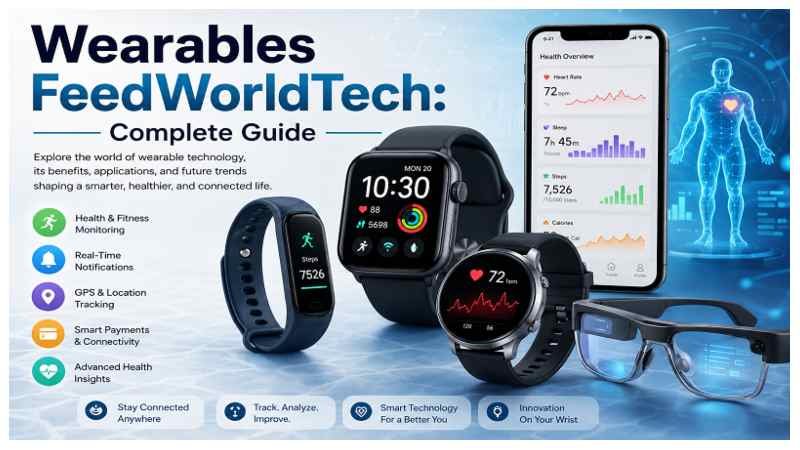
Wearable technology has become one of the fastest-growing sectors in the digital world. From smartwatches that monitor fitness levels to advanced medical devices that track health conditions, wearable technology is transforming how people interact with technology daily. Understanding Wearables FeedWorldTech: Complete Guide provides valuable insights into the devices, innovations, and trends shaping the future of connected living.
Wearables are no longer limited to fitness enthusiasts or technology professionals. They have become mainstream tools that support communication, healthcare, productivity, entertainment, and personal convenience. As technology continues to evolve, wearable devices are becoming smarter, more accurate, and more integrated into everyday life.
The rapid adoption of wearables demonstrates their ability to improve lifestyles while providing real-time access to valuable information. Whether used for health monitoring, navigation, communication, or business applications, wearable technology continues to redefine the relationship between humans and digital systems.
What Are Wearable Technologies?
Wearable technologies are electronic devices designed to be worn on the body while providing digital functionality and connectivity. These devices often include sensors, processors, wireless communication capabilities, and software applications that collect and analyze data.
Unlike traditional computing devices, wearables are built to integrate seamlessly into daily activities. They can track movement, monitor health metrics, deliver notifications, and connect with smartphones, cloud platforms, and other smart devices.
The wearable technology landscape includes an extensive collection of smart devices, ranging from intelligent wristwear and activity trackers to augmented reality eyewear, advanced health-monitoring solutions, and purpose-built equipment designed for specialized industrial environments.
Why Wearables Are Transforming Modern Life
Wearables are changing modern life by providing instant access to information and insights. Users no longer need to rely solely on smartphones or computers to receive updates, track activities, or manage tasks.
The convenience of wearable technology enables people to remain connected while maintaining mobility. Health-conscious individuals can monitor vital signs, professionals can manage notifications, and businesses can improve productivity through real-time data access.
As wearables become more advanced, their impact on healthcare, communication, education, and workplace efficiency continues to grow significantly.
Understanding Wearables FeedWorldTech
Wearables FeedWorldTech represents the growing ecosystem of wearable innovations that connect people with technology in meaningful ways. The concept revolves around creating devices that collect valuable data, process information intelligently, and provide actionable insights.
Modern wearable technology combines hardware, software, cloud computing, and artificial intelligence to deliver personalized experiences. This integration allows devices to adapt to user behaviors and provide increasingly relevant information.
Understanding this ecosystem helps explain why wearables have become essential components of digital transformation.
The Concept Behind Wearable Technology
The primary concept behind wearable technology is continuous connectivity and data collection. Wearables are designed to remain close to the user at all times, enabling them to gather information in real time.
Sensors embedded within devices collect data related to movement, health, location, environmental conditions, and user interactions. This information is then processed to generate insights that support decision-making and lifestyle improvements.
By combining convenience with intelligent functionality, wearable technology creates a seamless user experience.
How Wearables Connect with Daily Activities
Wearables are deeply integrated into daily routines. People use them during exercise, work, travel, shopping, and social interactions.
For example, a smartwatch can track physical activity during a workout, provide calendar reminders during business meetings, and support contactless payments while shopping. This versatility makes wearable technology highly valuable across various situations.
The ability to connect digital services with everyday activities is one of the primary reasons wearables continue gaining popularity.
Evolution of Wearable Technology
The wearable technology industry has evolved dramatically over the past several decades. What began as simple electronic accessories has developed into sophisticated devices capable of performing advanced computing functions.
Continuous innovation has expanded wearable capabilities while improving design, performance, and accessibility.
The evolution of wearables reflects broader advancements in technology and consumer expectations.
Early Wearable Devices
Early wearable devices focused on basic functionality such as timekeeping and simple calculations. Digital watches and portable calculators represented some of the earliest forms of wearable technology.
These devices introduced the concept of carrying computing capabilities on the body, laying the foundation for future innovations.
Although limited in functionality, early wearables demonstrated the potential of portable digital technology.
Growth of Smart Wearables
The introduction of smartphones accelerated the development of smart wearables. Manufacturers began creating devices that could connect to mobile applications and provide enhanced functionality.
Smartwatches, fitness trackers, and connected health devices quickly gained popularity due to their convenience and versatility.
Improved sensors, wireless communication, and battery technologies contributed to rapid industry growth.
Current Industry Trends
Today’s wearable technology market is driven by health monitoring, artificial intelligence, cloud connectivity, and personalization.
Consumers increasingly demand devices that provide actionable insights rather than simply collecting data. This trend has encouraged manufacturers to develop more intelligent and predictive solutions.
Current innovations focus on enhancing user experiences while expanding wearable capabilities.
Types of Wearable Devices
The wearable technology market includes a diverse range of devices designed for different purposes and user needs.
Each category offers unique features and benefits that contribute to the overall growth of the wearable ecosystem.
Understanding these categories helps users select devices that align with their goals.
Smartwatches
Smartwatches have emerged as one of the most widely adopted wearable technologies, combining convenience, connectivity, and advanced digital features in a compact wrist-worn device. They combine communication, productivity, fitness tracking, and entertainment features within a compact form factor.
Users can receive notifications, answer calls, track health metrics, access navigation tools, and interact with applications directly from their wrists.
The versatility of smartwatches makes them suitable for both personal and professional use.
Fitness Trackers
Fitness trackers are specifically engineered to monitor physical activity, wellness metrics, and overall health performance, helping users maintain and improve their daily fitness goals. These devices measure steps, calories burned, distance traveled, heart rate, and exercise performance.
Fitness enthusiasts use trackers to set goals, monitor progress, and maintain healthy lifestyles.
Their simplicity and affordability make them accessible to a broad audience.
Smart Glasses
Smart glasses integrate digital information into the user’s field of vision. They may provide navigation guidance, notifications, augmented reality experiences, and hands-free access to information.
These devices have applications in consumer markets, industrial environments, healthcare, and education.
Continuous innovations in screen technology are enhancing both the practical capabilities and overall user experience of these devices, making them more efficient, interactive, and user-friendly.
Wearable Medical Devices
Medical wearables are designed to monitor health conditions and support patient care.
Examples include glucose monitors, cardiac monitoring systems, blood pressure trackers, and remote patient monitoring devices.
These technologies help healthcare providers deliver more proactive and personalized treatment.
Key Features of Modern Wearables
Modern wearables offer a wide range of features that extend far beyond simple notifications.
These capabilities improve convenience, health management, and productivity.
Feature-rich devices provide greater value and user satisfaction.
Health and Fitness Monitoring
Health monitoring remains one of the most important functions of wearable technology.
Devices track metrics such as heart rate, blood oxygen levels, physical activity, calories burned, and stress levels.
These insights help users make informed decisions about their health and wellness.
Real-Time Notifications
Wearables provide immediate access to notifications from smartphones and connected applications.
Users can view messages, emails, reminders, and alerts without constantly checking their phones.
This convenience improves communication while reducing distractions.
GPS and Location Tracking
Built-in GPS technology enables location tracking, navigation, and route recording.
Athletes use GPS features to track workouts, while travelers benefit from navigation assistance.
Location-based functionality enhances usability across various activities.
How Wearable Technology Works
Wearables rely on a combination of hardware and software components to collect, process, and deliver information.
Understanding how these systems operate provides insight into their capabilities and limitations.
The integration of multiple technologies enables sophisticated functionality.
Sensors and Data Collection
Sensors serve as the foundation of wearable technology. They collect information related to movement, temperature, heart rate, location, and environmental conditions.
These sensors continuously gather data while users interact with the device.
Accurate data collection supports meaningful insights and personalized experiences.
Wireless Connectivity
Wireless communication technologies such as Bluetooth, Wi-Fi, and cellular networks enable wearables to connect with external systems.
Connectivity allows devices to synchronize data, receive updates, and communicate with cloud platforms.
Reliable communication enhances device functionality and convenience.
Cloud-Based Data Processing
Many wearable devices rely on cloud computing for data storage and analysis.
Cloud platforms process large volumes of information and generate insights that users can access through applications and dashboards.
Cloud integration supports scalability and advanced analytics.
Health and Wellness Applications
Health and wellness represent some of the most impactful applications of wearable technology.
Users increasingly rely on wearables to monitor health metrics and improve lifestyles.
These applications contribute to preventive healthcare and personal wellness.
Heart Rate Monitoring
Heart rate monitoring helps users understand cardiovascular performance during daily activities and exercise.
Continuous tracking provides insights into fitness levels, recovery rates, and overall health.
Accurate monitoring supports healthier lifestyle choices.
Sleep Tracking
Sleep tracking technology analyzes sleep patterns, duration, and quality.
Users gain valuable insights into their rest habits and identify opportunities for improvement.
Better sleep management contributes to overall well-being and productivity.
Activity and Fitness Management
Activity tracking encourages users to maintain active lifestyles by monitoring movement and exercise performance.
Goal-setting features provide motivation and accountability.
Fitness management tools support long-term health objectives.
Wearables in Healthcare
Healthcare organizations increasingly adopt wearable technology to improve patient care and operational efficiency.
These devices provide continuous monitoring and valuable clinical insights.
Wearables are helping transform healthcare delivery.
Remote Patient Monitoring
Remote monitoring enables healthcare providers to track patient conditions without requiring frequent in-person visits.
This approach improves convenience while supporting proactive care.
Remote monitoring is particularly valuable for chronic disease management.
Chronic Disease Management
Patients with chronic conditions benefit from continuous health monitoring and timely interventions.
Wearables provide healthcare professionals with data that supports informed treatment decisions.
This technology helps improve outcomes and quality of life.
Emergency Health Alerts
Many wearables can detect unusual health events and trigger alerts.
Emergency notifications help users receive assistance quickly during critical situations.
Rapid response capabilities can significantly improve safety.
Smart Wearables for Everyday Use
Wearables offer practical functionality beyond health monitoring.
Everyday applications improve convenience, communication, and entertainment experiences.
These capabilities contribute to widespread consumer adoption.
Communication and Messaging
Wearables simplify communication by providing instant access to calls, messages, and notifications.
Users remain connected without constantly interacting with smartphones.
This accessibility supports efficient communication throughout the day.
Mobile Payments
Contactless payment functionality allows users to make purchases quickly and securely.
Wearables eliminate the need to carry physical wallets in many situations.
Mobile payments enhance convenience and efficiency.
Entertainment and Media Access
Many wearables support music playback, podcast streaming, and media controls.
Users can manage entertainment content directly from their devices.
Integrated media features improve user experiences during travel, exercise, and leisure activities.
The Role of Artificial Intelligence in Wearables
Artificial intelligence is becoming increasingly important within wearable technology ecosystems.
AI enhances data analysis, personalization, and automation capabilities.
Intelligent systems improve the overall value of wearable devices.
Personalized Recommendations
AI algorithms analyze user behavior and provide customized recommendations.
These suggestions may relate to fitness goals, health improvements, productivity habits, or daily routines.
Personalization enhances relevance and engagement.
Predictive Health Insights
Predictive analytics helps identify patterns that may indicate potential health concerns.
Early detection supports preventive care and proactive decision-making.
Predictive capabilities represent a major advancement in wearable healthcare technology.
Intelligent Automation
AI-powered automation reduces manual interactions by automatically adjusting settings and providing contextual assistance.
Automation improves convenience and streamlines user experiences.
Smart systems continue becoming more adaptive over time.
Benefits of Wearables FeedWorldTech
Wearable technology offers numerous advantages for individuals and organizations.
These benefits extend across health, productivity, communication, and convenience.
The value of wearables continues increasing as technology evolves.
Improved Health Awareness
Continuous monitoring helps users better understand their health and wellness.
Access to real-time information encourages healthier behaviors and informed decisions.
Health awareness remains a primary driver of wearable adoption.
Enhanced Productivity
Wearables help users manage schedules, notifications, and tasks more efficiently.
Quick access to information reduces interruptions and improves workflow management.
Productivity benefits are particularly valuable in professional environments.
Greater Convenience and Connectivity
Wearables provide seamless access to digital services while maintaining mobility.
Users remain connected wherever they go, improving convenience and flexibility.
This connectivity enhances modern lifestyles.
Challenges Facing Wearable Technology
Despite significant advantages, wearable technology faces several challenges.
Addressing these issues is essential for long-term growth and adoption.
Manufacturers continue developing solutions to overcome limitations.
Battery Life Limitations
Battery performance remains a concern for many wearable devices.
Users expect extended usage without frequent charging.
Advancements in energy efficiency are helping improve battery life.
Data Privacy Concerns
Wearables collect significant amounts of personal information.
Protecting sensitive data is critical for maintaining user trust and regulatory compliance.
Privacy concerns remain an important consideration.
Device Compatibility Issues
Compatibility challenges can arise when connecting wearables with different platforms and devices.
Standardization efforts aim to improve interoperability and user experiences.
Better compatibility enhances ecosystem integration.
Security and Privacy in Wearables
Security plays a crucial role in protecting wearable technology users.
Strong safeguards help prevent unauthorized access and data breaches.
Comprehensive security measures support trust and reliability.
Protecting User Data
Data protection strategies include encryption, secure storage, and authentication controls.
These measures help safeguard personal information from unauthorized access.
Strong protection is essential for user confidence.
Secure Data Transmission
Wearables frequently transmit information between devices and cloud platforms.
Secure communication protocols help prevent interception and tampering.
Reliable transmission supports system integrity.
User Privacy Controls
Privacy settings allow users to manage data collection and sharing preferences.
Greater transparency helps users maintain control over personal information.
Effective privacy controls improve trust and compliance.
Wearables and the Internet of Things (IoT)
Wearables are important components of the broader Internet of Things ecosystem.
Connected devices work together to create intelligent environments and seamless user experiences.
IoT integration expands wearable functionality.
Connected Device Ecosystems
Wearables interact with smartphones, smart home systems, vehicles, and cloud platforms.
These connections create integrated digital ecosystems that improve convenience and efficiency.
Connectivity enhances overall functionality.
Smart Home Integration
Wearables can control smart home devices such as lighting, security systems, and climate controls.
This integration simplifies home automation and improves user experiences.
Smart homes benefit from wearable connectivity.
Cross-Platform Connectivity
Cross-platform support enables wearables to operate across different operating systems and applications.
Improved compatibility increases flexibility and user satisfaction.
Interoperability remains a key industry goal.
Wearables in Business and Industry
Businesses are increasingly adopting wearable technology to improve operations and employee experiences.
Industrial applications continue expanding across multiple sectors.
Wearables provide valuable operational benefits.
Employee Productivity Tracking
Organizations use wearables to monitor workflows and improve efficiency.
Data-driven insights support better resource management and performance optimization.
Productivity tracking enhances operational effectiveness.
Workplace Safety Monitoring
Safety-focused wearables help identify hazards and monitor employee well-being.
Real-time alerts support proactive risk management.
These devices contribute to safer working environments.
Industrial Applications
Industrial wearables support training, maintenance, logistics, and operational management.
Specialized devices improve efficiency and reduce errors.
Industrial adoption continues to grow rapidly.
Future Trends in Wearable Technology
The wearable industry is expected to experience significant innovation in the coming years.
Emerging technologies will expand capabilities and create new opportunities.
Future trends point toward greater intelligence and integration.
Advanced Health Monitoring
Future wearables may monitor additional health metrics with greater accuracy.
Enhanced diagnostic capabilities could transform preventive healthcare.
Health innovation remains a major focus area.
Augmented Reality Wearables
Augmented reality devices will provide immersive experiences that blend digital and physical environments.
Applications extend across education, healthcare, business, and entertainment.
AR wearables represent an exciting growth area.
AI-Powered Smart Devices
Artificial intelligence will continue driving smarter wearable experiences.
Advanced analytics and automation will improve personalization and functionality.
AI-powered devices are expected to dominate future innovation.
Choosing the Right Wearable Device
Selecting the right wearable depends on individual goals, preferences, and budgets.
Careful evaluation helps users maximize value and satisfaction.
Different devices serve different needs.
Understanding Your Needs
Users should identify primary objectives before selecting a wearable.
Health tracking, productivity, communication, and entertainment needs may influence purchasing decisions.
Clear goals simplify device selection.
Comparing Features and Specifications
Evaluating specifications helps users identify devices that meet their requirements.
Battery life, sensors, compatibility, and software features are important considerations.
Comparisons support informed decision-making.
Budget and Value Considerations
Price should be evaluated alongside functionality and long-term value.
The most expensive device is not always the best choice for every user.
Balanced evaluation ensures better purchasing outcomes.
Best Practices for Using Wearables
Following best practices helps users maximize device performance and longevity.
Proper usage improves experiences and protects investments.
Good habits support long-term success.
Maximizing Device Performance
Regular software updates and proper maintenance help maintain performance.
Optimized settings can improve efficiency and responsiveness.
Performance management enhances usability.
Managing Battery Life
Battery optimization techniques include adjusting settings, disabling unused features, and maintaining charging habits.
Efficient battery management improves convenience and reliability.
Longer battery life enhances user satisfaction.
Maintaining Data Security
Users should follow security best practices such as strong passwords, multi-factor authentication, and regular updates.
Security awareness helps protect sensitive information.
Responsible practices reduce risks.
The Future of Wearables FeedWorldTech
The future of wearable technology is filled with opportunities for innovation and growth.
Emerging advancements will continue expanding capabilities and transforming industries.
Wearables are expected to become increasingly intelligent and integrated.
Emerging Innovations
New sensor technologies, advanced materials, and intelligent software will shape future wearable devices.
Innovation will improve accuracy, comfort, and functionality.
Continuous advancement drives industry growth.
Market Growth Opportunities
The wearable market continues expanding across healthcare, consumer electronics, sports, education, and industrial sectors.
Growing demand creates significant opportunities for businesses and developers.
Market expansion supports ongoing investment.
Long-Term Industry Impact
Wearables will continue influencing how people interact with technology, manage health, and perform daily activities.
Their long-term impact extends across multiple industries and societal functions.
The future of connected living will be strongly influenced by wearable technology.
Conclusion
Wearable technology has evolved from simple electronic accessories into powerful connected devices that improve health, productivity, communication, and convenience. Through innovations in sensors, cloud computing, artificial intelligence, and connectivity, wearables continue transforming modern life. Understanding Wearables FeedWorldTech: Complete Guide provides valuable insight into the technologies, benefits, challenges, and future opportunities shaping this rapidly growing industry.
Key Takeaways
- Wearables provide continuous connectivity and real-time data access.
- Health monitoring is one of the most significant applications of wearable technology.
- AI and cloud computing enhance wearable functionality.
- Wearables support healthcare, business operations, and personal productivity.
- Security and privacy remain important considerations.
- Future innovations will expand capabilities and improve user experiences.
- The wearable technology market continues experiencing strong growth.
Final Thoughts on Wearables FeedWorldTech
Wearables represent a major step forward in the evolution of personal technology. By combining intelligent software, advanced sensors, and seamless connectivity, these devices are helping individuals and organizations make better decisions, improve efficiency, and enhance quality of life. As innovation continues, wearable technology will play an increasingly important role in shaping the future of digital experiences and connected ecosystems.