
Technology Solutions Professional
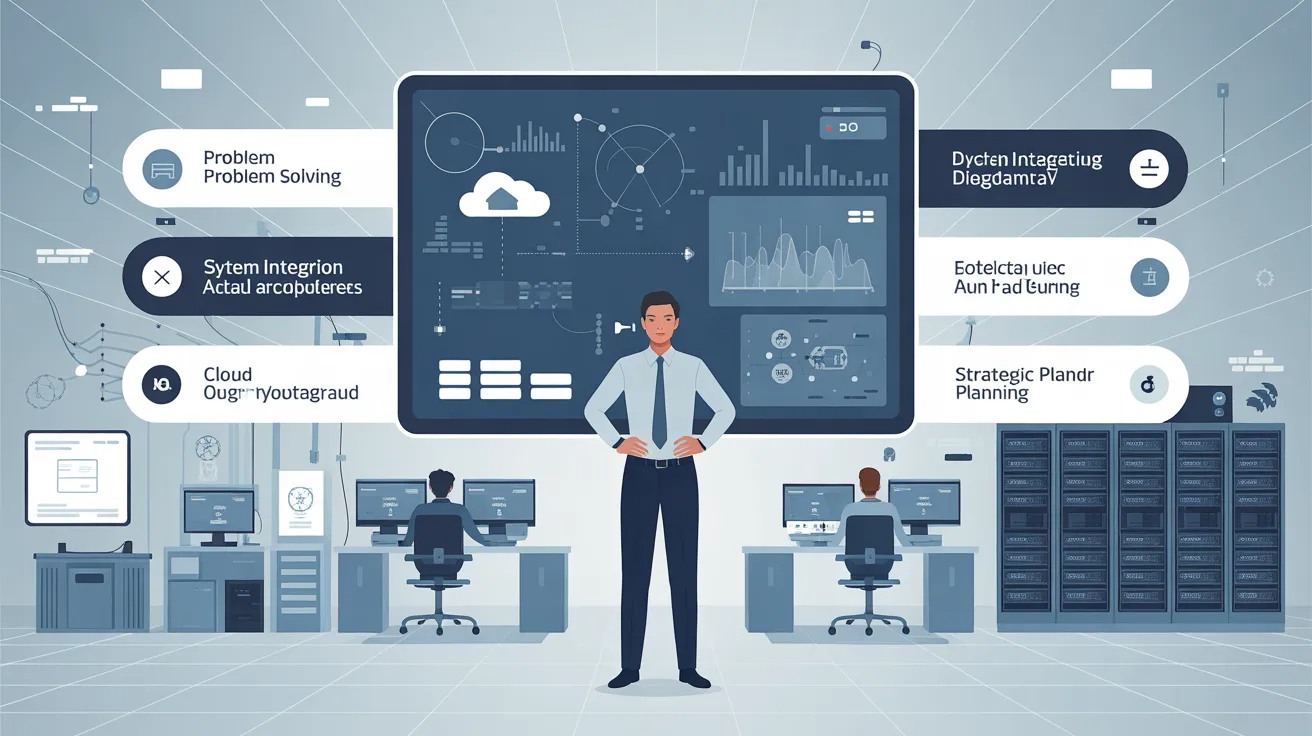
A Technology Solutions Professional is a specialist who knows technology and business requirements and applies this to design, recommend and implement effective technical solutions. The job will require problem analysis, finding the appropriate tools or systems, and having the end product of the solution to achieve organizational objectives in an effective and dependable manner.
To put it simply, a Technology Solutions Professional is an intermediary between technical teams and business stakeholders Corteiz . They hear what a business requires, they put those requirements into technical plans and assist in ensuring that the solution is constructed and utilized accordingly. They do not only look at coding and systems, but they are concerned with the practical application of the appropriate technology on actual issues.
The modern digital world is extremely fast, and organizations have to depend on Technology Solutions Professionals to make sound decisions regarding technology. They assist companies in the appropriate adoption of tools, perfect processes, cut costs, and remain competitive. They can make systems scalable, secure, and efficient by ensuring that technology is aligned with business objectives, which is critical in the long-term success and growth.
What Does a Technology Solutions Professional Do
Training and consultation
Technology Solutions Professional offers advice and training to clients or internal teams. They describe the functionality of systems, tools, or technologies and assist the users on the effective use of systems, tools, and technologies. They also guide businesses on the type of technologies to use depending on the objectives and the applicability in practice.
Understanding client/business needs
A clear understanding of what the business or client needs is one of the key tasks. This entails posing questions, problem analysis, and collecting specific information regarding work processes, issues, and goals. With such needs, they will be able to make sure that the end solution is what is expected and will address the real issue.
Designing and recommending solutions
Once the requirements have been determined, they come up with an appropriate technical solution. This could involve the choice of tools, system architecture design or proposing software and services. They will consider various alternatives and suggest the most efficient, scalable, and cost-effective solution that will be appropriate to the business requirements.
Supporting implementation
They also assist at the implementation stage by collaborating with developers, engineers or IT teams. They assist in making sure that the solution is configured properly, problem troubleshooting, and ensuring that all things are working as intended. They assist to the point where it is deployed and running smoothly.
Key Responsibilities
Analyzing requirements
A Technology Solutions Professional is a professional who carefully reads and comprehends the requirements of the business or client. This entails information collection, posing the correct questions, and problems that should be addressed. In examining requirements and making them clear, they make sure that the solution is in line with actual business objectives.
Creating technical solutions
They develop effective technical solutions that are practical depending on the requirements. This can be choosing the right technologies, designing of system structures and the manner in which various components will interact. The aim is to develop solutions that are stable, scalable, and applicable to the issue.
Coordinating with teams
They collaborate with various teams that include developers, engineers, project managers and stakeholders. Effective coordination will make everyone aware of the requirements and use the same plan. This collaboration assists in an easy development and effective delivery of the solution.
Ensuring performance and efficiency
They ensure that the end product is a solution that is good and works effectively. This involves testing system speed, reliability, security and the system performance. They can also propose changes or refinements so as to have a smooth running system that is of good quality.
Important Skills for a Technology Solutions Professional
Technical knowledge
A Technology Solutions Professional should possess a high level of knowledge on technology such as software systems, tools, platforms, and fundamental architecture. This learning will assist them in selecting the appropriate technologies as well as knowing how various systems interact to construct efficient solutions.
Business understanding
They must also be versed in the operations of businesses in addition to the technical skills. This involves an understanding of business objectives, processes and difficulties. Having such knowledge, they will be able to develop solutions that cannot only be technical but also contribute to business goals and increase their efficiency.
Problem-solving ability
One of the skills in this position is problem-solving. They also have to be able to solve complicated problems, divide them into smaller components as well as identifying practical solutions to them. This assists in eliminating technical difficulties and making good judgments during system design.
Communication skills
There should be effective communication since they will be dealing with the technical department as well as non-technical stakeholders. They should simplify ideas, communicate requirements and make sure that all involved are aware of the plan and solution.
Flexibility and adaptability
Technology and business requirements are evolving at a very fast rate and therefore, a Technology Solutions Professional should be dynamic and capable of adapting. They are supposed to be willing to learn new tools, adapt to new demands and cope with project change without being less efficient or focused.
Why Businesses Need Tech Solutions Experts
Bridging the gap between IT and business
Tech Solutions Experts serve as an interface between technical and business stakeholders. They know both parties and assist in translating the business requirements to the technical requirements. This makes sure that IT teams develop solutions that are actually aligned to the business goals and expectations.
Driving innovation and new ideas
These professionals assist companies in embracing new technologies and new ways of doing things. They stimulate innovation by experimenting with superior tools, systems and processes and keep organizations competitive in the rapidly evolving digital world.
Improving security
They are significant in enhancing the security of the systems through prescribing secure technologies, locating risks, and compliance to appropriate practices. This assists in securing confidential information and limits the risks of cyber attacks or system weaknesses.
Cost optimization
Tech Solutions Experts assist companies to select cost effective solutions by examining the options available, and also preventing unwarranted expenses. They emphasize effective utilization of resources, which will enable them to lower their operational expenses without compromising quality and performance.
Supporting long-term growth
They come up with scalable and flexible solutions that are able to expand with the business. This will make sure that systems are not rendered useless when the organization grows, and business can stay stable and successful in the long run.
How a Technology Solutions Professional Works
Step-by-step workflow
Technology Solutions Professional has a systematic work process that is used to make sure that issues are addressed successfully. Its steps typically begin with problem comprehension, then to planning, designing, implementation, and ultimately, improvement of the solution depending on the outcome and feedback. All of these steps are significant to provide a quality and effective result.
Requirement gathering
During this step, they gather specific data on what is required by the business or client. This means meetings, discussions and analysis of the current systems. The idea is to have a clear understanding of the problem, user expectation as well as any constraint and proceed further.
Solution design
Once requirements have been collected they develop a solution plan. This involves the appropriate choice of technologies, architecture of systems, and the description of the interaction between various products. The design aims at developing a solution that is scalable, secure and business goals.
Implementation and testing
During this stage, the solution is created and implemented through collaborating with technical teams. After implementation, it is well tested to determine whether it functions properly. Testing assists in the detection of bugs, performance or errors that should be corrected prior to actual deployment.
Feedback and improvement
Follow-up is done by gathering user and stakeholder feedback after deployment. On this feedback, changes and enhancements are carried out to improve performance, usability, and reliability. This process of continuous improvement makes the solution effective in the long run.

Core Skills Required
Technical skills
An individual with appropriate background in technology must possess a strong background in technical fields, including software systems, databases, networking fundamentals, cloud computing and systems architecture. These are the abilities that assist in comprehending the interrelation of various technologies and how to choose the appropriate tools to use in a solution. They are also equipped with knowledge of the modern technologies that enable them to create efficient, secure and scalable systems.
Analytical and soft skills
This is in addition to technical skills as one needs good analytical skills to analyze problems, interpret data and make wise decision. Soft skills like teamwork, communication and critical thinking are also essential. These competencies assist in the development of complicated concepts and the ability to work with various teams, as well as comprehending technical and business-oriented point of view.
Tools and Techniques Used
Common tools
There are numerous tools that Technology Solutions Professionals employ in the process of designing, developing, and managing solutions. They can be project management applications, such as Jira or Trello, collaboration applications, such as Slack or Microsoft Teams, and development applications, such as Visual Studio Code or GitHub. Applications are also widely hosted and managed on cloud providers such as AWS, Azure, or Google Cloud. These tools can assist in the streamlining of workflows and productivity.
Methodologies and frameworks
They adhere to such organized methods as Agile, Scrum, or DevOps to handle projects effectively. These approaches assist teams to operate in structured sprints, enhance communication and provide updates constantly. Frameworks are rules to use to construct systems in a standardized and expandable manner, so that solutions are stable and maintainable.
Best Practices
Design best practices
Good design practices aim at developing systems which are scalable, secure and maintainable. This encompasses proper planning of system architecture, selecting the appropriate technologies and making sure that the components are reusable and modular. A properly developed system must be elastic to accommodate changes in the future.
Implementation best practices
Clean coding, appropriate version control, and frequent testing should also be observed in the implementation. Coders must adhere to code standards, check code and correct early. Continuous integration and continuous delivery are also practices that can be used to ensure a smooth deployment and reduce errors.
Documentation and governance
To know how a system operates, it is necessary to document it properly. It encompasses technical documentation, user manuals and system drawings. Governance is the adherence to the policies, standards, and compliance rules in order to maintain the consistency, security, and quality throughout the project. Proper documentation and governance facilitate simple management, updating, and scaling of systems as time progresses.
Technology Solutions Professional vs Related Roles
Comparison with Software Developer
The core activity of a Software Developer is writing, testing and maintaining code to develop applications or systems. They are more technical and program-oriented in their work. On the other hand, a Technology Solutions Professional is concerned with the larger picture, i.e. by being aware of the needs of the business, developing solutions, and showing the ways in which technology is to be applied. As the developers construct the solution, Technology Solutions Professionals assist in determining what needs to be constructed, and why.
Comparison with Solutions Architect
The Solutions Architect has the task of coming up with the general system architecture, both the technical architecture and the integration of components. A Technology Solutions Professional deals with the solution design too but has more focus on matching technology to business needs and communicating with stakeholders. The two roles are somewhat similar in design, however, the Solutions Architect is more well-rounded in terms of deep technical architecture whereas the Technology Solutions Professional has more balance between business and technical aspects.
Career Path of a Technology Solutions Professional
Entry-level to advanced roles
Entry-level positions that include junior consultant, technical support specialist and associate solutions professional are some of the career entry points. As they get experience, they progress to mid-level jobs where they work on more complex projects, work with clients, and work out solutions. In high levels, they can assume senior positions, head of projects, or team management.
Growth opportunities
The field has numerous growth opportunities, such as the possibility to specialize in such areas as cloud computing, cybersecurity, data solutions, or enterprise systems. There are also opportunities where professionals can advance to the leadership positions, consultancy or even strategic positions within organizations depending on their interests and capabilities.
Career progression
The career development is usually based on the learning of the basic technical and business concepts to the end-to-end solutions work. As time goes by professionals become experienced in project management, communication with the stakeholders, and system design. As they continue to expand, they may become senior experts, consultants or leaders in their respective organizations in making crucial technology decisions.
Education Requirements
Academic background
A Technology Solutions Professional typically possesses a degree in computer science, information technology, software engineering or some related major. Although a formal degree is advantageous, hands-on skills and practical experience are also necessary in this job.
Certifications and training
The certifications have the potential to augment knowledge and enhance career prospects. Some well-known certifications can be cloud platforms, networking, cybersecurity, or vendor-specific technologies. The skills are also updated with the latest trends by continuous training through online courses, workshops, and professional programs.
Relevant fields of study
Computer science, information systems, data science, software engineering, and business technology are some of the relevant areas of study. These majors offer a solid ground of technical understanding as well as problem-solving, which is crucial in this career.
Salary Overview
Factors affecting salary
The pay may depend on experience, technical expertise, qualifications, occupation, and location. Specialists or people of high skills tend to receive large salaries.
Industry and experience impact
The various industries have varying salary scales. As an example, larger organizations may provide more compensation in such fields as finance, healthcare, and technology than small organizations. Another significant factor could be experience, where senior professionals and those that have already achieved success in their projects usually command higher earnings than an entry-level applicant.
Future Trends
Emerging technologies
The job is changing due to the rise of new technologies including cloud computing, artificial intelligence, machine learning, and automation. The use of these technologies in developing modern solutions is becoming expected of Technology Solutions Professionals.
Evolving responsibilities
The scope of responsibilities has changed to include not only basic solutions design but also strategic planning, support of digital transformation, and innovation. Now, professionals are more engaged in the business advisory of businesses on long-term technology strategies.
Market demand
Technology Solutions Professionals are in demand because businesses are still relying on digital systems and processes that are driven by technology. This is a very relevant and demanded career that is needed especially in the future because organizations require professionals who are able to match technology with business objectives.
Conclusion
Summary of role importance
Technology Solutions Professional is crucial in the contemporary organizations linking the business requirements to appropriate technology solutions. They assist in the design, recommendation, and direction of the implementation of efficiency-improving, security-improving, and performance-improving systems. Their knowledge of technical and business factors makes them make sure that solutions are viable, scalable and aligned to organizational objectives.
Final thoughts on career value
Good career growth and long-term value are enjoyed in this career because of the growing use of technology in all industries. It is a difficult and fulfilling task that entails the integration of technical knowledge and experience with strategic thinking and communicative abilities. The future of technology solutions profession holds a bright future as the need to integrate new technologies in business is likely to persist, and hence it is a promising and future-oriented profession.
Author

aqssa566@gmail.com
Related Posts

Austin Tech News Today Growth, Innovation and What It Means for Silicon Hills
Austin has been becoming one of the most vibrant technology ecosystems in the US. The city, dubbed as Silicon Hills, is a...
Read out all