
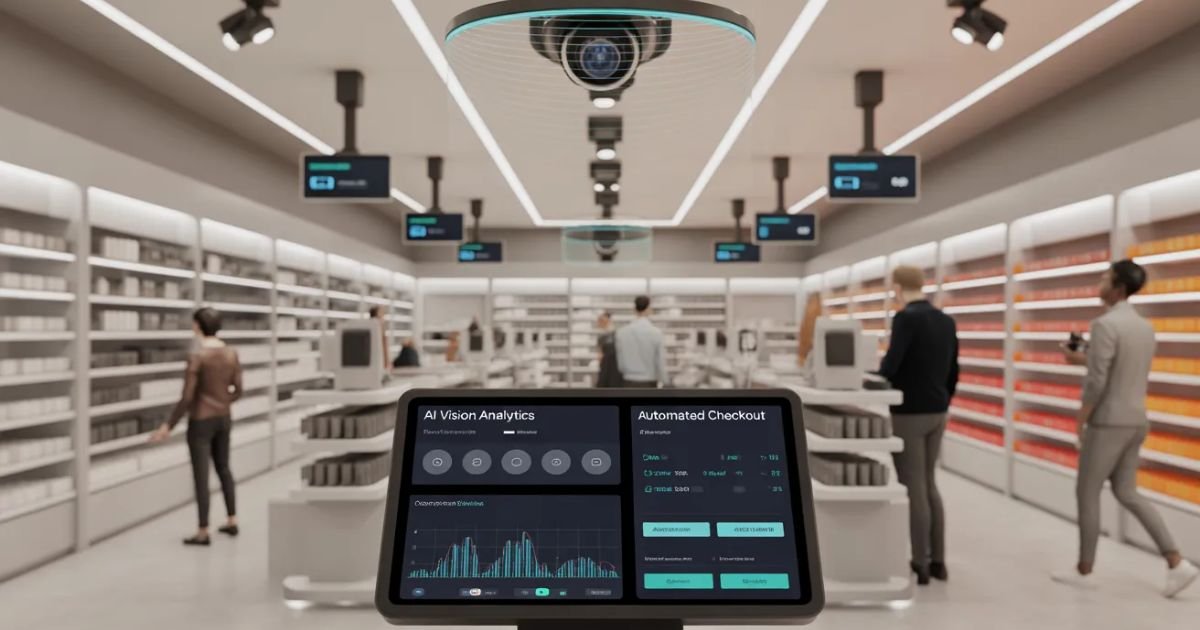
AI vision automation in retail helps stores see what is happening inside in real time, which was difficult to track before. Intelligent cameras and AI models help retailers track the availability of shelves, placement of products on shelves, and movement of customers at any time. This will enable store managers to react fast to any problem, minimize out of stock cases, and achieve better store organization without staff having to check everything themselves.
The retail AI vision automation is also capable of converting visual data to actionable insights, which is another important aspect. These systems will be used to analyze customer interactions with products, identify their shopping behaviors and unusual activities. This has also allowed retailers to maximize the store layout and enhance their loss prevention programs and provide more personalized shopping environments without compromising on accuracy and operational control.
2. What Is AI Vision Automation in Retail?
AI vision automation in retail can be defined as an application of artificial intelligence and computer vision technologies to analyze the visual data in a retail setting automatically. It assists the retailers in tracking the activity of the stores, customer behavior, inventory and enhancing the security without the human factor being involved at all times. Retailers will be able to make quicker, more precise choices by automating visual tasks and increase the overall efficiency of the work.
computer vision retail automation is based on smart cameras with AI algorithms to record and recognise images and videos in real time. Such systems are able to identify products, trace customer footprint, detect shelves that are empty and unusual activities. The AI models analyze visual data on a continuous basis, which allows retailers to react to the changes immediately and maximize the performance of the stores based on the data.
4. How Retail AI Vision Automation Works
The automation of the vision of AI in retail begins with cameras in the store. Such cameras capture images and videos of shelves, products and customers at any given time. This assists the store managers in the view of what is going on in the store without having to check everything manually.
These images and videos are then examined by the AI system to know what is taking place. It is able to identify products, monitor the movement of customers, get to know when shelves are empty, and identify any suspicious activity. This aids the store in acquiring valuable information in a fast manner.
The system will be able to aid real time decision making after analysing the data. As an example, it can instruct personnel to replenish products, change store arrangement, or control long queues when in store are busy
Lastly, the system is able to send notifications and even undertake certain actions automatically. Notifications regarding low stock quantities, overcrowded places, or potential security concerns can be received by the store managers. The system at times can rearrange products or help in assigning staff where necessary and the store will run smoothly and efficiently.
5. Applications of AI Vision Automation in Retail
Customer Behavior Analysis: The AI vision systems would be able to observe the customer movement in the store, what they are picking and how long they are taking in various sections. This assists retailers to know the preference of customers and how to better the store layout or product placement.
Smart Shelves & Inventory Tracking: The cameras with AI can inspect shelves round the clock. They are able to identify empty areas, lost articles or low stocked products and report them to the staff to replenish them to minimize human errors and leave their shelves stocked.
Cashier-less and Self-Checkout Stores: AI vision enables a certain portion of stores to have no cashiers. The shoppers can select products and the machine will automatically identify what they have covered and will charge them at the counter, thereby making shopping quick and easy.
Loss Prevention and Theft Detection: The AI cameras will have an opportunity to monitor suspicious behavior and alert the security staff in the real-time. This reduces shoplifting as well as making the stores have a safer environment and the stores need not always rely on human supervision.
Customized Shopping Experience: AI vision will be able to follow the trends of customers and recommend to them what they might enjoy depending on their visits or their current actions. It assists in making shopping experience with a customer more personal and enjoyable.
Queue & Footfall Management: AI systems check visitors and track the queues. This enables the staff to open new counters during line length or handling large crowd areas to enhance customer satisfaction and efficiency of the store.
6. Benefits of Retail AI Vision Automation
- Better Operation Effectiveness: The repetitive work such as shelf monitoring and customer flow can be done through AI vision automation. This saves time for the staff members and the store runs in a better manner as they are able to concentrate on other more significant activities.
- Reduced Human Errors: The products are frequently tracked manually or customers are monitored which may cause an error. The AI systems are also more precise and reliable, minimizing mistakes in the handling of stocks, pricing, and store processes.
- Better Inventory Accuracy: Intelligent cameras and AI constantly monitor shelf stock. This helps to make sure that items are filled when necessary, eliminates situations of being out of stock and helps to save money on overstocking on behalf of the retailers.
- Customer Experience Improved: AI can also make shopping personal by proposing items of shopping according to the customer behavior. Customers have an enjoyable shopping experience due to faster check out, reduced problems with stock and a well organized store.
- Cutting Costs and Increment in Profits: Automation saves on additional personnel and ensures that no loss is experienced due to theft or errors. Effective operations and improved inventory management ensures that the stores save on costs and the general profitability.
10. Conclusion
The automation of AI vision in retailing is changing the way stores are run and related with customers. AI and computer vision can help retailers to track operations in real time, enhance efficiency, and offer an individualized shopping experience.
Long term effects of retailers include reduced cost, improved inventory control and loyalty of customers. Tech Mindora has detailed guides, insights, and tips on how to implement AI vision automation in retail, and is a good resource to any person interested in studying this technology in depth. The implementation of these technologies is therefore not a choice anymore, it is becoming mandatory in remaining competitive in the rapidly changing retail market.
Author

aqssa566@gmail.com
Related Posts
AI in Industrial Automation Landscape, Benefits, and the Future with Generative, Edge, and Agentic AI 2026
AI can assist industries to be more productive, have fewer machine breakdowns, and have better products. It also assists human workers to...
Read out all