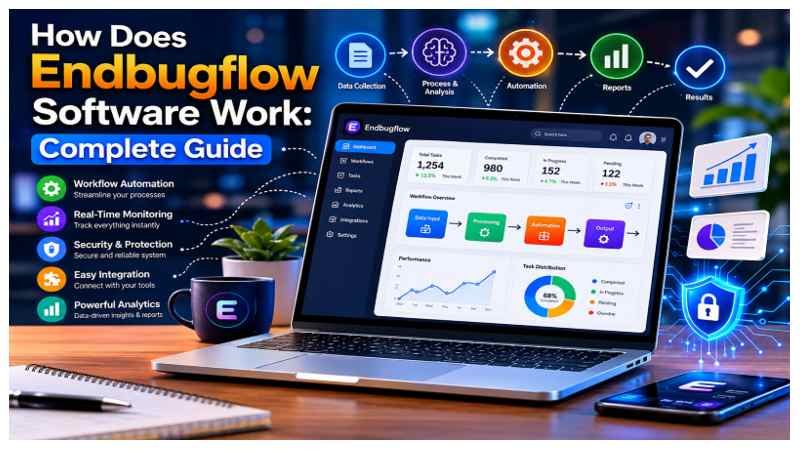
Modern organizations rely on software solutions to streamline operations, automate repetitive tasks, and improve overall efficiency. Understanding How Does Endbugflow Software Work: Complete Guide helps users gain a clear picture of how a software platform can collect information, process data, automate workflows, and deliver actionable insights. While Endbugflow is discussed here as a general software platform, the concepts explored reflect the technologies and processes commonly found in modern business software solutions.
Software platforms today are designed to reduce manual workloads while increasing productivity. They combine user-friendly interfaces, advanced processing systems, cloud technologies, and automation tools to create seamless digital experiences. Understanding how Endbugflow software works allows users to appreciate the technology behind its functionality and how it supports business objectives.
What Is Endbugflow Software?
Endbugflow software can be described as a digital solution designed to manage workflows, process information, and automate operational tasks. Its purpose is to help organizations improve efficiency by centralizing activities, organizing data, and reducing repetitive manual processes.
Like many modern software applications, Endbugflow may include features such as workflow management, reporting systems, user administration, task tracking, analytics dashboards, and integration capabilities. These features work together to provide users with a comprehensive platform for managing various business functions.
The software is typically built with scalability and flexibility in mind, allowing it to adapt to changing organizational needs while maintaining consistent performance.
Why Understanding Its Workflow Matters
Understanding software workflows is important because it helps users maximize the value of the platform. When users know how information moves through the system, they can use features more effectively and make informed decisions about implementation and optimization.
A clear understanding of workflows also improves troubleshooting, training, and system adoption. Businesses that understand how software functions internally are better equipped to identify opportunities for improvement and automation.
By learning how Endbugflow software operates, organizations can achieve greater efficiency and improve overall operational performance.
Overview of How Endbugflow Software Works
At its core, Endbugflow software follows a structured process that transforms user input into meaningful results. Information enters the system through various sources, undergoes processing and analysis, and is then presented in a useful format.
The software acts as a bridge between data collection and decision-making. It organizes information, automates tasks, and delivers outputs that support users in achieving their objectives.
This workflow allows businesses to reduce complexity while maintaining visibility into critical operations.
Core Functionality and Purpose
The primary function of Endbugflow software is to simplify workflows and improve productivity. The software manages data, coordinates activities, and automates processes that would otherwise require significant manual effort.
Core functionality may include task assignment, workflow automation, progress tracking, reporting, and communication management. These capabilities help organizations operate more efficiently while maintaining accuracy and consistency.
The software’s purpose is to create a centralized environment where users can manage information and processes effectively.
Key Components of the System
Several components work together to support Endbugflow software operations. These components typically include the user interface, application logic, databases, integration services, and security systems.
Each component serves a specific role within the software ecosystem. The user interface enables interaction, the application logic processes requests, databases store information, and integration services connect external systems.
Together, these components create a cohesive and functional platform.
The Working Process of Endbugflow Software
The software follows a logical workflow that begins with data collection and ends with actionable outputs. Each stage contributes to transforming raw information into meaningful insights and operational improvements.
Understanding this process helps users appreciate how software automates tasks and supports decision-making.
The workflow remains efficient through structured data handling and automated processing mechanisms.
Data Collection and Input
Every software process begins with data collection. Users may enter information manually, import files, connect external systems, or integrate third-party services.
The software validates incoming data to ensure accuracy and consistency. Validation reduces errors and helps maintain reliable information throughout the system.
Accurate data collection forms the foundation for successful processing and reporting.
Processing and Analysis
Once data enters the system, processing engines analyze and organize the information according to predefined rules and workflows.
This stage may involve calculations, categorization, validation checks, workflow triggers, and business logic execution. Processing transforms raw data into structured information that can support decision-making.
Efficient analysis enables organizations to extract valuable insights from large datasets.
Output Generation and Reporting
After processing is complete, the software generates outputs such as reports, dashboards, notifications, summaries, and visual analytics.
These outputs provide users with actionable information that supports operational management and strategic planning.
Effective reporting helps organizations monitor performance, identify trends, and make informed decisions.
Main Features of Endbugflow Software
The software includes several key features designed to improve productivity and simplify workflow management.
These features help users manage tasks, monitor performance, and automate routine operations.
Together, they create a comprehensive digital solution.
Automated Workflow Management
Workflow automation reduces the need for manual intervention by automatically handling repetitive tasks and predefined processes.
Automation improves consistency, reduces errors, and accelerates task completion. Organizations benefit from streamlined operations and improved efficiency.
Automated workflows allow employees to focus on higher-value activities rather than routine administrative work.
Real-Time Data Monitoring
Real-time monitoring provides immediate visibility into system activities and performance metrics.
Users can track progress, identify issues, and respond quickly to changing conditions. Real-time insights support proactive decision-making and operational agility.
Continuous monitoring enhances transparency and improves overall system effectiveness.
Customizable User Settings
Customization allows users to tailor the software environment according to their preferences and requirements.
Settings may include dashboard layouts, notification preferences, workflow configurations, and reporting options.
Flexible customization improves user satisfaction and supports diverse operational needs.
Software Architecture Behind Endbugflow
Software architecture defines how the platform is structured and how components interact with one another.
A well-designed architecture supports performance, scalability, security, and maintainability.
Strong architectural foundations contribute to long-term software success.
Front-End Interface
The front-end interface is the part of the software users interact with directly. It includes dashboards, forms, navigation menus, and visual elements.
Front-end design focuses on usability, accessibility, and responsiveness. A well-designed interface helps users complete tasks efficiently while minimizing confusion.
An intuitive interface contributes significantly to user satisfaction.
Back-End Processing System
The back-end system handles data processing, business logic, workflow execution, and communication between components.
Users do not directly interact with the back end, but it plays a crucial role in software functionality.
Efficient back-end systems ensure reliability, performance, and scalability.
Database Integration
Databases store and organize the information used by the software. Effective database integration enables fast data retrieval and secure storage.
Database systems support reporting, analytics, workflow automation, and operational management.
Proper database design improves efficiency and supports long-term growth.
Technologies Powering Endbugflow Software
Modern software relies on a variety of technologies to deliver functionality, performance, and reliability.
Technology choices influence development speed, scalability, and maintainability.
Selecting the right technologies is essential for long-term success.
Programming Languages Used
Programming languages serve as the foundation of software development. Different languages may be used for user interfaces, server-side processing, automation, and database interactions.
Developers choose languages based on performance requirements, compatibility needs, and project goals.
Appropriate language selection improves software quality and development efficiency.
Frameworks and Development Tools
Frameworks and tools accelerate development by providing reusable components and standardized workflows.
These resources help developers build applications more efficiently while maintaining consistency and reliability.
Development tools also support testing, debugging, collaboration, and deployment activities.
Cloud and Infrastructure Support
Modern cloud environments deliver flexible computing power, storage, and networking capabilities that enable software applications to operate efficiently while dynamically adapting to changing workload demands.
Cloud services improve availability, simplify maintenance, and reduce infrastructure costs.
Modern software increasingly relies on cloud technologies to support growth and operational flexibility.
User Interaction with Endbugflow Software
User interaction is a critical aspect of software effectiveness. A positive user experience encourages adoption and improves productivity.
The software should provide clear navigation, intuitive controls, and accessible functionality.
Successful interaction design helps users accomplish tasks efficiently.
Account Setup and Access
Users typically begin by creating accounts and configuring access credentials.
Account management systems control permissions, authentication, and user roles. Proper account setup ensures secure and organized software usage.
Authentication processes help protect sensitive information.
Dashboard Navigation
Dashboards provide centralized access to key information, reports, and system functions.
Effective dashboard design improves visibility and simplifies navigation. Users can quickly locate important information and manage activities efficiently.
Well-organized dashboards enhance productivity and decision-making.
Managing Tasks and Workflows
Task management tools allow users to create, assign, monitor, and complete activities within the software.
Workflow management features coordinate tasks and ensure that processes follow established procedures.
Effective task management supports operational consistency and accountability.
Automation Capabilities of Endbugflow
Automation is one of the most valuable aspects of modern software platforms.
Automated systems reduce repetitive work and improve operational efficiency.
Organizations increasingly rely on automation to remain competitive.
Reducing Manual Work
Automation eliminates many routine tasks that traditionally require manual effort.
By reducing repetitive activities, employees can focus on strategic initiatives and higher-value responsibilities.
This shift improves productivity and job satisfaction.
Workflow Optimization
Workflow optimization ensures that processes operate as efficiently as possible.
Automation identifies bottlenecks, streamlines task execution, and improves resource utilization.
Optimized workflows contribute to faster outcomes and better performance.
Intelligent Process Management
Advanced software platforms increasingly incorporate intelligent process management capabilities.
These systems analyze data, recommend actions, and automate decision-making within predefined parameters.
Intelligent management enhances efficiency and supports business growth.
Security and Data Protection
Security is a fundamental requirement for modern software solutions.
Organizations must protect sensitive information from unauthorized access and cyber threats.
Strong security measures help maintain trust and compliance.
User Authentication Methods
Authentication verifies user identities before granting system access.
Methods may include passwords, multi-factor authentication, biometric verification, and single sign-on solutions.
Strong authentication reduces security risks and improves account protection.
Data Encryption Practices
Encryption protects information by converting data into secure formats that unauthorized users cannot easily access.
Encryption safeguards data during storage and transmission.
Strong encryption practices are essential for maintaining confidentiality.
Access Control and Permissions
Access controls determine what users can view, modify, or manage within the software.
Role-based permissions help organizations enforce security policies and protect sensitive information.
Effective access management improves accountability and reduces risks.
Performance and Scalability
Performance and scalability determine how effectively software handles increasing workloads.
Organizations need systems that remain responsive as demands grow.
Scalable solutions support long-term success.
Handling Large Volumes of Data
Modern software often processes significant amounts of information.
Efficient data handling techniques ensure that performance remains consistent even as data volumes increase.
Scalable architectures support growing business requirements.
System Performance Optimization
Performance optimization focuses on improving speed, responsiveness, and resource efficiency.
Developers continuously refine software to eliminate bottlenecks and improve user experiences.
Optimization contributes to reliability and operational effectiveness.
Future Growth and Scalability
Scalable systems are designed to accommodate future growth without requiring major redesigns.
Cloud resources, modular architectures, and distributed processing support expansion.
Planning for scalability ensures long-term sustainability.
Integration with Other Systems
Software rarely operates in isolation. Integration capabilities enable communication between different platforms and services.
Seamless integration improves efficiency and expands functionality.
Connected systems create more comprehensive digital ecosystems.
Third-Party Application Support
Third-party integrations allow software to connect with external tools and services.
These connections improve workflow continuity and reduce manual data transfers.
Integration enhances flexibility and operational efficiency.
API Connectivity
APIs facilitate communication between software systems.
API connectivity enables secure data exchange and supports automation across platforms.
Strong API capabilities increase interoperability.
Data Synchronization Features
Data synchronization ensures that information remains consistent across connected systems.
Automatic synchronization reduces errors and improves operational accuracy.
Reliable synchronization supports informed decision-making.
Benefits of Using Endbugflow Software
Software platforms deliver numerous benefits that improve business operations and productivity.
Organizations adopt these solutions to enhance performance and reduce complexity.
The benefits extend across multiple operational areas.
Improved Efficiency
Automation and workflow management significantly improve efficiency.
Users complete tasks faster while reducing manual effort and operational delays.
Increased efficiency contributes to higher productivity.
Enhanced Accuracy
Software systems reduce human errors by standardizing processes and automating calculations.
Improved accuracy supports better reporting and decision-making.
Reliable information enhances organizational performance.
Better Decision-Making Support
Reporting tools, analytics, and dashboards provide valuable insights that support strategic planning.
Decision-makers gain access to accurate and timely information.
Better information leads to better business outcomes.
Common Challenges and Solutions
Software implementation and operation may present various challenges.
Understanding these challenges helps organizations prepare effective solutions.
Proactive management improves success rates.
Technical Issues and Troubleshooting
Technical issues may include performance bottlenecks, connectivity problems, and configuration errors.
Effective troubleshooting processes help resolve issues quickly and minimize disruptions.
Documentation and support resources play important roles in problem resolution.
Managing System Updates
Regular updates introduce improvements, security fixes, and new features.
Organizations should implement updated strategies that minimize disruptions while maintaining system reliability.
Effective update management supports long-term performance.
Ensuring Smooth Operations
Smooth operations require monitoring, maintenance, training, and optimization.
Organizations that invest in proactive management experience fewer disruptions and greater efficiency.
Operational excellence supports long-term success.
Future Developments of Endbugflow Software
Software platforms continue evolving to meet changing business and technological requirements.
Future innovations will further improve automation, intelligence, and connectivity.
Continuous development ensures ongoing relevance.
Emerging Technologies
Emerging technologies such as cloud-native architectures, machine learning, predictive analytics, and advanced automation are shaping the future of software.
These innovations create new opportunities for efficiency and growth.
Technology evolution continues to drive digital transformation.
AI and Automation Enhancements
Artificial intelligence enhances software by enabling predictive insights, intelligent recommendations, and advanced automation.
AI-powered features improve decision-making and operational efficiency.
Future software solutions will increasingly leverage these capabilities.
Long-Term Product Vision
A long-term vision guides software development priorities and strategic investments.
Future roadmaps often focus on scalability, security, automation, and user experience improvements.
Clear vision supports sustainable growth and innovation.
Conclusion
Understanding How Endbugflow Software Works: A Complete Guide provides valuable insight into the technologies, processes, and workflows that power modern software solutions. From data collection and automation to security, scalability, and integration, every component contributes to delivering reliable functionality and improved efficiency. By understanding how the software operates, users can maximize its value and support successful digital transformation initiatives.
Key Takeaways
- Endbugflow software streamlines workflows through automation and centralized management.
- Data collection, processing, and reporting form the foundation of software functionality.
- Cloud technologies support scalability and performance.
- Security measures protect users and sensitive information.
- Integration capabilities improve operational efficiency.
- Automation reduces manual workloads and increases productivity.
- AI and emerging technologies will shape future software enhancements.
Final Thoughts on How Does Endbugflow Software Work
As organizations continue embracing digital solutions, understanding software functionality becomes increasingly important. Endbugflow software represents the type of modern platform designed to simplify operations, improve accuracy, and support informed decision-making. Through automation, intelligent workflows, scalable architecture, and continuous innovation, software solutions like Endbugflow help businesses adapt to evolving technological demands and achieve long-term success.